🇻🇳 Vietnam Visa Guide for Thailand-Based Expats 2026
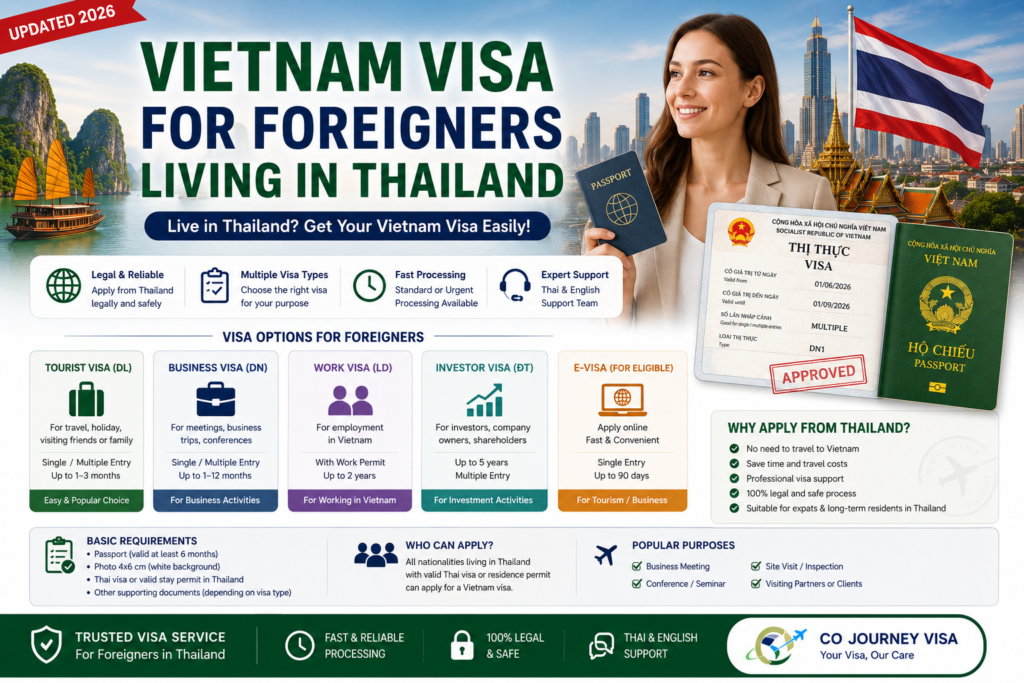
Vietnam Visa for Foreigners Living in Thailand
American, British, European, Indian, Chinese, Japanese, Korean or another nationality living in Bangkok, Phuket, Pattaya, Chiang Mai or elsewhere in Thailand? Your Vietnam visa requirement is normally determined by the passport you travel with — not by your Thai visa or Thai work permit.
Updated: 29 August 2026eVisa: up to 90 daysSingle / Multiple EntryApply while outside Vietnam
Thailand is home to a large community of foreign professionals, retirees, students, digital workers, business owners and long-term residents who regularly travel to Vietnam for holidays, meetings, exhibitions, factory visits or work.
A very common misunderstanding is that having a Thai Non-B visa, work permit, retirement extension, student visa, marriage status or long-term residence permission somehow changes your Vietnam visa eligibility.
In most cases, it does not.
Quick Answer
If you are a foreign national living in Thailand, Vietnam normally looks at the passport or travel document you use to enter Vietnam, your nationality, your purpose of travel and the Vietnamese visa or visa-exemption rules that apply to that passport.
Your Thai residence status does not automatically give you a Vietnam visa exemption.
There are generally three routes to check:
1. Visa exemption
If your passport nationality qualifies under Vietnam's unilateral exemption or an international/bilateral agreement, you may enter without a visa for the permitted period when all conditions are met.
2. Vietnam eVisa
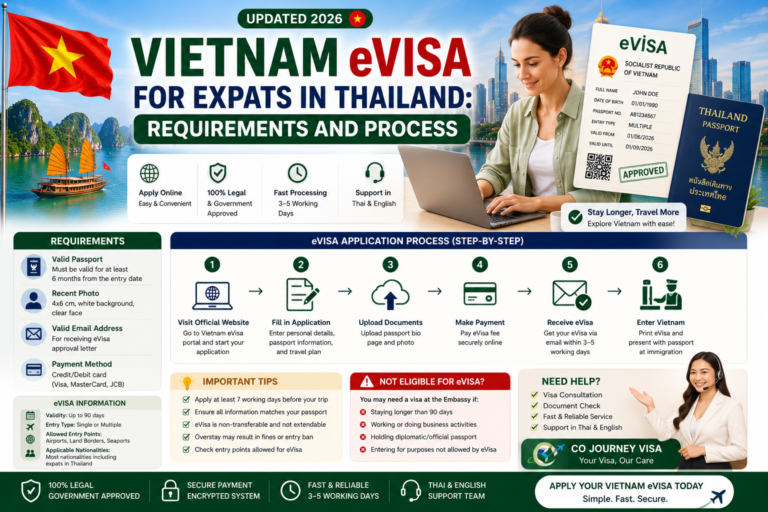
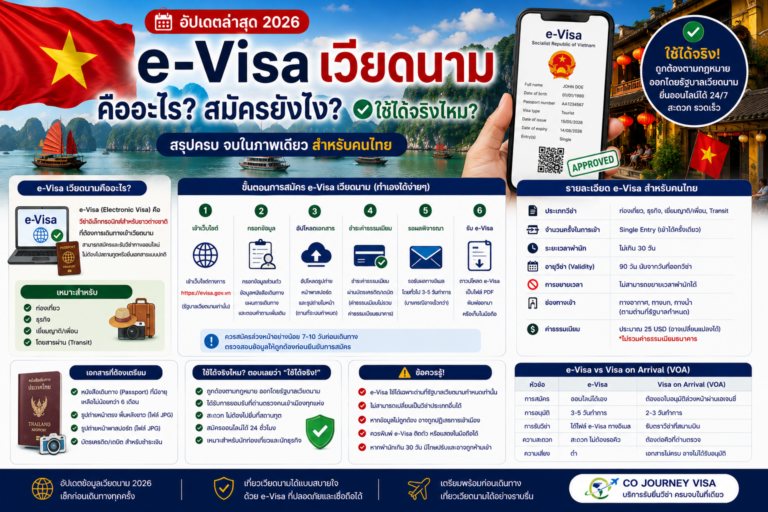
Vietnam currently provides eVisas to citizens of all countries and territories under Resolution 127/NQ-CP, subject to the applicable legal conditions and special categories. The official eVisa can be valid for up to 90 days, single or multiple entry.
3. Sponsored / Embassy-related visa
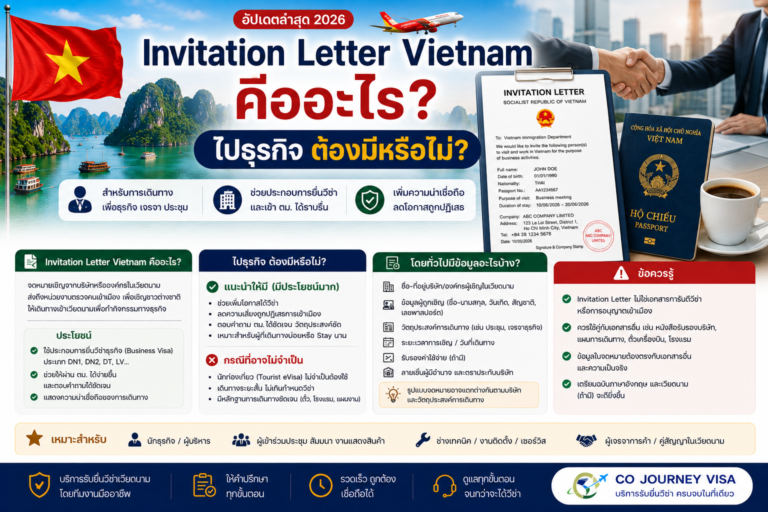
For certain business, work, investment, study, conference, family and other sponsored purposes, a Vietnamese company, organization or individual may need to arrange an approval or sponsorship process before visa issuance.
Most important: living in Thailand does not mean you need to apply as a Thai citizen. Use the nationality and passport details shown on your actual passport.
The rule to remember
🇹🇭 Thailand status = your right to stay or work in Thailand
🛂 Passport nationality = a major factor in determining your Vietnam entry route
🇻🇳 Vietnam visa / exemption = governed by Vietnamese immigration rules
A Thai work permit is not a Vietnam travel document.
A Thai work permit, Thai residence certificate or Thai visa may help prove where you currently live if a process asks for your address or residence history, but it does not replace a Vietnamese visa and does not change your nationality.
Not sure whether your passport needs a Vietnam visa?
Send us your nationality, passport type, travel dates, number of entries and purpose of travel. We can help identify whether you should check visa exemption, eVisa or a sponsored visa route.
Does Living in Thailand Change Your Vietnam Visa Requirement?
Usually, no.
Vietnam's visa exemption rules are generally linked to citizenship, passport type and applicable international agreements. Likewise, Vietnam's eVisa policy is linked to the passport holder and the conditions under Vietnamese immigration law.
Your status in Thailand answers a different question: are you legally allowed to stay in Thailand?
Document / Status
What It Controls
Does It Automatically Exempt You from a Vietnam Visa?
Foreign Passport
Your nationality and international travel identity
This is a key document Vietnam uses for entry eligibility
Thai Non-B Visa / Extension
Permission relating to your stay in Thailand
No
Thai Work Permit
Work authorization in Thailand
No
Thai Retirement / Marriage / Student Status
Thai immigration status
No
Vietnam eVisa
Permission to travel to and enter Vietnam under its validity and conditions
Separate Vietnamese immigration document
Vietnam Visa Exemption
Entry without visa when your passport and trip meet exemption rules
Depends on Vietnamese rules for your nationality/passport
เลื่อนตารางซ้าย-ขวาได้บนมือถือ
Example scenario: British citizen working in Bangkok
The traveler has a Thai Non-B status and Thai work permit.
For Vietnam, the traveler should check the Vietnamese rules applying to the British passport. The Thai work permit does not convert the traveler into a Thai passport holder.
Example scenario: Indian citizen living in Thailand
The traveler has lived in Thailand for several years.
Vietnam entry eligibility should still be checked using the Indian passport and the intended purpose of travel. If a visa is required, the official Vietnam eVisa may be an available route because Vietnam currently applies eVisa issuance to citizens of all countries and territories under Resolution 127/NQ-CP, subject to legal conditions.
Visa Exemption vs eVisa vs Sponsored Vietnam Visa
Route
Best Starting Point For
Maximum / Key Rule
Application Style
Visa Exemption
Passport holders covered by Vietnamese exemption rules
Period depends on nationality, passport type and legal basis
No visa application when all exemption conditions are satisfied
Vietnam eVisa — EV
Many tourism, short business and other eligible trips
Maximum 90 days, single or multiple entry
Online self-application while outside Vietnam
Sponsored Visa
Business, work, investment, study, family and other sponsor-based cases
Depends on visa code
Vietnam sponsor / approval process may be required
Diplomatic / Official Route
Special passport or official categories
Special procedure
Contact the Vietnamese Embassy / competent authority
เลื่อนตารางซ้าย-ขวาได้บนมือถือ
You do not choose a visa only by asking, “Which one is easiest?”
Your entry document should match the actual trip. A 5-day holiday, a 60-day regional business trip and a one-year job assignment are different immigration situations even when the traveler lives in Thailand in all three cases.
Can Foreigners Living in Thailand Apply for a Vietnam eVisa?
In general, yes.
Vietnam's official Immigration Department eVisa portal states that the system is for foreigners outside Vietnam applying personally for an eVisa.
Resolution 127/NQ-CP provides eVisa issuance for citizens of all countries and territories.
The official system currently states:
eVisa maximum validity: 90 days
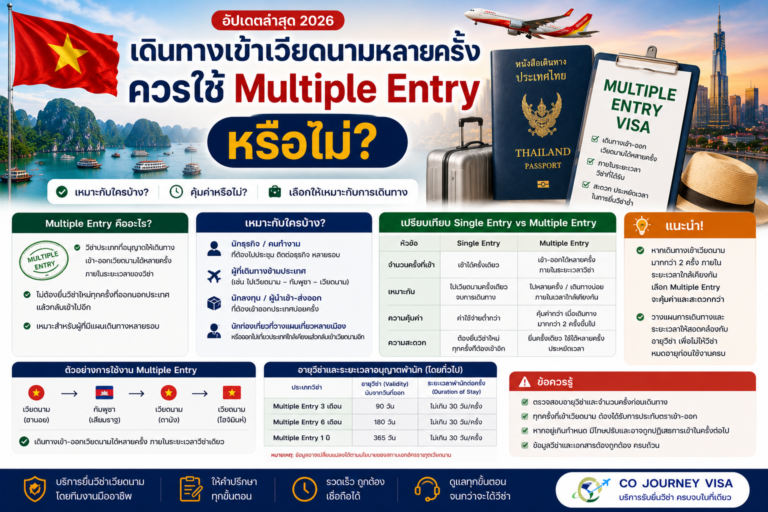
Single-entry or multiple-entry options
Official fee: USD 25 for single entry
Official fee: USD 50 for multiple entry
The fee is non-refundable if the visa is not granted
The applicant must be outside Vietnam when using the personal eVisa application route
The applicant must hold a passport or valid international travel document
The traveler must not fall under cases of suspension/prohibition from entry
eVisa holders must use border gates approved for eVisa entry/exit
Activities in Vietnam must match the purpose of entry
You normally do not need to fly back to your country of citizenship just to file an eVisa application.
If you are physically in Thailand and otherwise meet the eVisa conditions, the official system's key location condition is that you are outside Vietnam.
Use only the official eVisa domain: evisa.gov.vn
Many commercial websites use wording or design that can look official. An agency may legitimately provide a service, but it should not present itself as the Vietnam Immigration Department.
For a detailed application guide, see our internal guide to Vietnam eVisa.
What If Your Passport Is Visa-Exempt for Vietnam?
Vietnam has more than one type of visa exemption.
The official eVisa and Ministry of Foreign Affairs information distinguishes between:
Unilateral ExemptionVietnam independently grants exemption
Current official information states that qualifying citizens under the unilateral scheme can receive a temporary stay of up to 45 days when the applicable conditions are met.
Treaty / Bilateral ExemptionBased on an international agreement
The permitted period depends on the relevant treaty. If the treaty does not specify the temporary stay period, current immigration information states that a 30-day temporary stay is granted.
Do not assume your nationality has the same exemption as a friend.
Two foreigners living in the same Bangkok condominium can have completely different Vietnam entry rules because one holds a visa-exempt passport and the other does not.
Visa-exemption policies can also change. Before departure, check the latest list published by Vietnam's Ministry of Foreign Affairs rather than relying on an old blog or a previous trip.
Which Vietnam Visa Route Fits Your Purpose?
Purpose
Route to Check First
Important Point
Holiday / Tourism
Visa exemption or eVisa
Check passport nationality and intended number of days
Short Business Meeting
Visa exemption, eVisa or business route depending on circumstances
Meeting is different from performing technical work
Business Sponsored by Vietnam Company
DN1 / DN2 or another appropriate sponsored route
Vietnam sponsor and Immigration approval may be involved
Employment / Technical Work
Work Permit / Exemption + appropriate immigration status
eVisa alone does not grant work authorization
Investment
Investor visa ĐT route
Visa code depends on the actual investment basis
Study
DH or another appropriate sponsored route
School/institution documents may be required
Family / Dependant
TT, VR or another route depending on relationship and sponsor
Relationship evidence is important
เลื่อนตารางซ้าย-ขวาได้บนมือถือ
An eVisa is not automatically a work visa.
The official eVisa portal specifically states that foreigners must conduct activities in Vietnam in accordance with their purpose of entry. If you are being sent from a Thai company to install equipment, repair machinery, manage a site or work for a Vietnam entity, check the Labour route separately.
Applying Through the Vietnamese Embassy in Bangkok
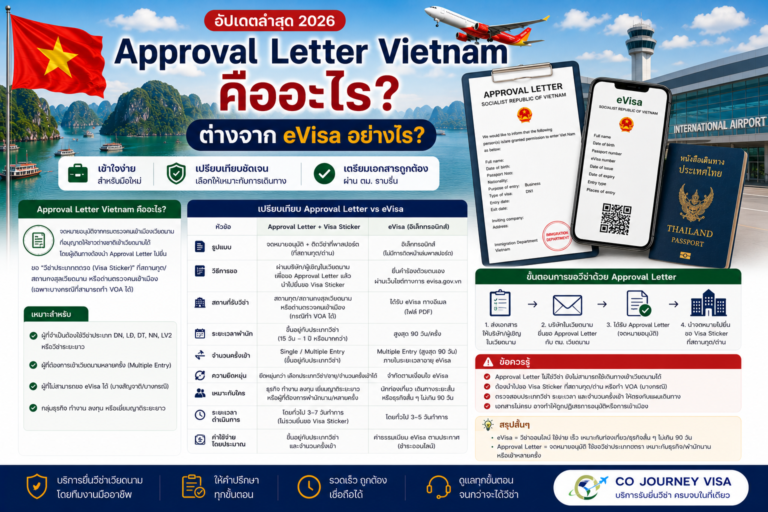
Foreign residents in Thailand may also encounter visa cases that require a Vietnamese sponsor, approval letter or Embassy-related procedure.
The Vietnamese Embassy in Thailand currently lists the following for business, investment, journalism, work with Vietnamese authorities, study, conference/seminar, employment, family and other relevant visa cases:
Passport
Visa application form
One 4 × 6 cm photograph
Approval letter from the Vietnam Immigration Department
The Embassy guidance currently states that the passport for these applications should remain valid for at least six months from the visa expiry date.
The Embassy page lists a processing period of three working days for the submitted visa dossier.
Do not interpret “3 working days” as the total time for every sponsored case.
If a Vietnam company, school, employer, family member or organization must first obtain Immigration approval, that approval stage is separate from the Embassy's visa-issuance stage.
The Embassy's May 2026 notice lists consular application hours as 09:00–11:30 on Monday, Tuesday, Wednesday and Friday, with collection hours of 15:00–16:30 on those days. Check again before visiting because Embassy schedules and public holidays can change.
Documents to Prepare Before Applying
The exact checklist depends on your route, but preparing the following information first reduces avoidable mistakes:
Passport bio page
Exact passport nationality
Passport type: ordinary, diplomatic, official or other travel document
Current passport expiry date
Current address in Thailand
Planned Vietnam arrival date
Planned Vietnam departure date
Single-entry or multiple-entry requirement
Airport, land border or seaport you plan to use
Purpose of travel
Hotel or accommodation information when relevant
Vietnam company or sponsor details when relevant
Invitation or approval documents for sponsored routes
Recent portrait image and passport image for eVisa application
Thai re-entry status for your return to Thailand
The name on your application should follow the passport.
Do not simplify, translate or rearrange names based on Thai documents if this makes the information inconsistent with the passport you will present at Vietnam Immigration.
How Much Passport Validity Do You Need?
Passport-validity rules should be checked according to the route you are using rather than applying one universal number to every traveler.
Route
Current Official Guidance
eVisa
The official eVisa portal requires a passport or valid international travel document and compliance with Vietnam entry conditions.
Unilateral Visa Exemption
Current official exemption information states that the passport must be valid for at least six months from entry for the unilateral exemption scheme.
Sponsored Visa via Embassy in Bangkok
The Embassy currently states that the passport must be valid for at least six months from the visa expiry date for the listed sponsored visa categories.
เลื่อนตารางซ้าย-ขวาได้บนมือถือ
If your passport is close to expiry, verify before paying for flights or visa services.
Passport rules can differ according to the route, and airlines may also perform their own document checks before boarding.
Do You Need a Thai Visa or Residence Permit to Apply?
For the personal Vietnam eVisa route, the official eligibility conditions focus on the applicant being outside Vietnam, holding an appropriate passport/travel document and not falling under prohibited-entry cases.
The eVisa eligibility page does not list possession of a Thai work permit or Thai long-term visa as a universal eVisa requirement.
Example
You are a Canadian citizen living in Bangkok with a Thai Non-B status.
On the Vietnam eVisa application, your nationality and passport information come from your Canadian passport.
Your Thai status does not become your nationality.
However, a sponsored, Embassy, work, family or legalization case can involve additional supporting documents. If your documents were issued in Thailand or another country, check the exact document and legalization requirements before processing them.
Before Leaving Thailand: Check Your Thai Re-Entry Status
This is one of the most important practical points for expats living in Thailand.
Receiving a Vietnam visa does not protect your existing Thai immigration status.
Before flying from Thailand to Vietnam, check whether your Thai status requires a re-entry permit.
Thailand Immigration publishes the TM.8 procedure for an Application for Re-Entry Permit to Return into the Kingdom. Whether you need it depends on your particular Thai permission to stay, visa and immigration situation.
Check the expiry of your Thai permission to stay
Check whether you already have single or multiple re-entry permission
If required, arrange the Thai re-entry permit before departure
Check your passport expiry
Check whether your Thailand entry status will still be valid on your return date
Keep your Thai work/residence documents available if relevant to your return
Think about both borders.
A successful Vietnam entry is only half of the trip for someone who lives in Thailand. You also need a valid route back into Thailand.
Common Scenarios for Foreigners Living in Thailand
Example scenario 1: Expat in Bangkok taking a 5-day holiday in Da Nang
Start by checking whether the passport nationality has a Vietnamese visa exemption.
If the passport is exempt and the traveler meets the conditions, no eVisa may be necessary. If it is not exempt, check the official eVisa route.
Example scenario 2: Foreign retiree in Thailand planning a 60-day Vietnam trip
Thai retirement status does not create a Vietnam exemption.
If the passport's visa-free period is shorter than the planned stay or there is no applicable exemption, an eVisa valid for the required travel window may be the appropriate route to review.
Example scenario 3: Foreign manager employed in Thailand attending meetings in Ho Chi Minh City
A short meeting trip should first be assessed by passport nationality, number of days and actual activities.
If the Vietnam company is formally sponsoring the traveler, a DN business route may be more appropriate. If the traveler will perform actual employment or technical work, Work Permit rules must also be checked.
Example scenario 4: Engineer based in Thailand sent to install machinery in Vietnam
This is not simply a tourism/eVisa question.
Installation, commissioning, repair or other technical activity can require a Work Permit or Work Permit Exemption analysis under Vietnam's foreign-worker rules. The immigration document and labour authorization should be planned together.
Example scenario 5: Foreign spouse living in Thailand visiting family in Vietnam
Depending on the relationship, nationality and duration, visa exemption, eVisa, VR or TT-related routes may need to be considered.
If applying on a family basis, do not assume that a Thai marriage document alone is automatically ready for use in Vietnam; translation or legalization requirements should be checked for the specific procedure.
10 Common Vietnam Visa Mistakes Made by Expats in Thailand
Mistake
Why It Causes Problems
Better Approach
Choosing nationality as Thai because you live in Thailand
Nationality must match the passport used for travel
Use your actual passport nationality
Assuming Thai residence gives Vietnam visa exemption
The two immigration systems are separate
Check Vietnamese rules for your passport
Applying through a website that only looks official
Can create higher fees or fraud risk
Verify evisa.gov.vn
Using an old passport number on the application
Visa information may not match travel document
Apply with the passport you will travel with
Choosing Single Entry when you plan Thailand–Vietnam–Thailand–Vietnam
One approved entry may not cover the itinerary
Check whether Multiple Entry is required
Ignoring the approved entry/exit validity window
Flight dates may fall outside visa validity
Compare visa dates with every flight
Assuming eVisa permits employment
Immigration status and labour authorization are separate
Check Work Permit/Exemption when working
Using a visa-exemption rule from an old trip
Exemption policies can change
Check the latest MFA list
Forgetting the Thai re-entry requirement
Your return to Thailand can become the bigger problem
Check Thai Immigration before leaving
Booking a non-refundable flight before checking the route
Visa or sponsorship timing may not match departure
Confirm the document route first
เลื่อนตารางซ้าย-ขวาได้บนมือถือ
The fastest way to identify the correct route is to send five pieces of information:
Passport nationality → Passport type → Purpose → Number of days → Single or multiple entry.
If the trip involves employment, investment, study or family sponsorship, add the Vietnam sponsor information as well.
Vietnam Visa Checklist for Foreign Residents in Thailand
Check the nationality on your passport
Check the passport type
Check current Vietnam visa exemption rules for that passport
Calculate your actual number of days in Vietnam
Confirm your purpose of travel
Decide whether Single or Multiple Entry is needed
If applying for eVisa, use evisa.gov.vn
Enter your name exactly as supported by your passport
Double-check passport number
Double-check date of birth
Double-check nationality
Double-check proposed entry and exit dates
Check your intended airport or border gate
Keep a digital and printed copy of the approved eVisa when practical
Do not assume an eVisa gives permission to work
If a Vietnam company sponsors you, confirm the correct visa category
If working, check Work Permit / Work Permit Exemption separately
If using family documents, check translation/legalization requirements
Check your Thai permission to stay before departure
Check whether your Thai status requires a re-entry permit
Check both your Vietnam entry route and Thailand return route
Recheck official sources shortly before travel
Vietnam Visa Assistance for Foreigners Living in Thailand
Co Journey Visa assists foreign nationals who live in Thailand and need help understanding which Vietnam entry route fits their passport and purpose.
Passport & Visa Exemption Review — check the route based on your actual nationality
Vietnam eVisa Review — Single/Multiple Entry, travel dates and application data
Business Visa Review — sponsored business travel and DN-related cases
Work Visa Review — LĐ1/LĐ2 and Work Permit-related cases
Investor / Family / Study Review — identify sponsor-based routes
Document Review — check passport, invitation, sponsor and supporting documents before submission
You can also review our Vietnam visa service for travel from Thailand to Vietnam.
Service scope:
Co Journey Visa is a private Thailand-based visa and document assistance company. We are not the Vietnam Immigration Department, the Embassy of Vietnam or another government authority. Visa issuance and permission to enter Vietnam remain decisions of the competent Vietnamese authorities.
Vietnam Immigration Department — Official eVisa System
Confirms eVisa conditions, maximum 90-day validity, single/multiple entry, USD 25 / USD 50 fees, requirement for applicants to be outside Vietnam and the obligation to conduct activities according to the purpose of entry. Vietnam Official eVisa Portal
Government of Vietnam — Resolution 127/NQ-CP
Provides for eVisa issuance to citizens of all countries and territories. Resolution 127/NQ-CP
Government of Vietnam — Consolidated Immigration Law 62/VBHN-VPQH
Current consolidated law governing visas, entry, exit, transit and residence of foreigners in Vietnam, issued 23 March 2026. Immigration Law 62/VBHN-VPQH
Ministry of Foreign Affairs / Embassy of Vietnam in Thailand — Visa Exemption List
Use this source to verify whether your specific passport currently qualifies for unilateral, bilateral or treaty-based visa exemption. Vietnam Visa Exemption Information
Embassy of Vietnam in Thailand — Visa Procedure
Lists the Bangkok Embassy process for business, investment, work, study, conference, family and other sponsored visa categories, including passport, application form, photograph and Immigration approval letter requirements. Vietnam Embassy Bangkok Visa Procedure
Embassy of Vietnam in Thailand — 2026 Consular Contact and Hours
Current published contact details and consular submission/collection hours. Vietnam Embassy Bangkok Contact Information
Thailand Immigration Bureau — Re-Entry Permit
Foreign residents in Thailand should separately check whether their Thai status requires a TM.8 re-entry permit before leaving Thailand. Thailand Immigration Re-Entry Permit Handbook
Fact Freshness:
Visa-exemption lists, Embassy procedures, eVisa border gates, processing arrangements and immigration requirements can change. Recheck the official Vietnam eVisa portal, Ministry of Foreign Affairs and Embassy of Vietnam in Thailand shortly before submitting an application or travelling.
Frequently Asked Questions
It depends mainly on the passport used to enter Vietnam, not on the fact that you live in Thailand. If your passport nationality qualifies for a Vietnamese visa exemption and your trip fits the permitted stay and conditions, you may not need a visa. Otherwise, an eVisa or another appropriate Vietnamese visa may be required.
Yes, in general. The official Vietnam eVisa system is for foreigners who are outside Vietnam, and Resolution 127/NQ-CP provides eVisa availability for citizens of all countries and territories, subject to the legal conditions and special categories stated by Vietnamese authorities. Living in Thailand does not require you to return to your country of citizenship simply to submit an eVisa application.
No. A Thai visa, Thai work permit, retirement status, student status or Thai residence permission does not by itself create a Vietnam visa exemption. Vietnamese entry eligibility is determined by Vietnamese law, your passport or travel document, nationality, purpose of travel and the visa or exemption rules that apply to you.
The official Vietnam eVisa system states that an eVisa can be valid for a maximum of 90 days and can be issued for single or multiple entries. The official eVisa fee is USD 25 for single entry and USD 50 for multiple entry, and the fee is non-refundable if the visa is not granted.
For business, investment, work, study, conference, family and certain other sponsored visa categories, the Vietnamese Embassy in Thailand currently lists a passport, visa application form, 4x6 cm photograph and an approval letter from the Vietnam Immigration Department among the required documents. The Embassy page lists a processing period of three working days for a valid dossier, but the separate approval or sponsorship stage may take additional time.
An eVisa is an immigration document and does not automatically give the holder permission to work. The official eVisa portal states that foreigners must conduct activities in Vietnam in accordance with the purpose of entry. If the activity is employment, technical work or another form of foreign work, Work Permit or Work Permit Exemption requirements should be checked separately.
Usually not for a standard self-applied eVisa because the official eVisa process is online. Embassy involvement becomes more relevant for sponsored visa categories, diplomatic or official passport cases, certain business, work, investment, study or family routes, or when Vietnamese authorities require an approval or sponsorship process.
Check that your Thai permission to stay, visa and any re-entry permission required for your specific Thai immigration status remain valid. Vietnam visa approval does not preserve or extend your Thai immigration status. Thailand Immigration publishes the TM.8 re-entry permit procedure for foreigners whose Thai stay requires that permission before departure.
Summary: Vietnam Visa for Thailand-Based Foreigners
Living in Thailand does not make you a Thai national for Vietnam visa purposes
Use the passport nationality you will actually travel with
Check visa exemption before applying for a visa
Visa exemption periods vary by nationality and legal basis
Vietnam currently provides eVisa access to citizens of all countries and territories subject to legal conditions
eVisa applicants using the personal route must be outside Vietnam
Vietnam eVisa can be valid for up to 90 days
eVisa can be Single or Multiple Entry
Official eVisa fee is USD 25 / USD 50
Use evisa.gov.vn
Thai work permits do not replace Vietnam visas
Thai retirement or marriage status does not create Vietnam visa exemption
An eVisa does not automatically authorize employment in Vietnam
Sponsored business, work, investment, study or family cases may require a different route
The Vietnamese Embassy in Bangkok handles consular visa procedures for relevant cases
Check passport validity according to your specific visa route
Check the eVisa-approved border gate before travelling
Check your Thai re-entry status before leaving Thailand
Vietnam visa approval does not preserve your Thai immigration status
Always recheck current official information before departure
Author: Chaiyapat Promboriruk / ไชยภัทร พรหมบริรักษ์
Visa and document preparation specialist with 5 years of experience assisting visa and international document cases.
Living in Thailand and planning a trip to Vietnam?
Send your passport nationality, travel dates, purpose and number of entries to Co Journey Visa. We can help review whether visa exemption, eVisa or a sponsored Vietnam visa route is more appropriate before you submit.