Vietnam eVisa for Expats in Thailand: Requirements and Process
A practical 2026 guide for foreigners living in Thailand: who can use Vietnam's eVisa system, what the official application asks for, how single and multiple entry differ, and which mistakes to catch before you travel.
📅 Updated: 29 August 2026✍️ Chaiyapat Promboriruk — Visa & Document Specialist, 5 years' experience⏱ Approx. 10-minute read
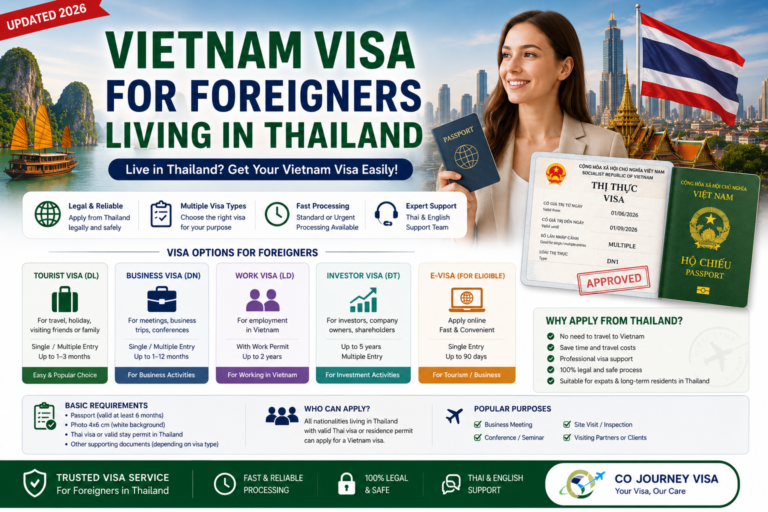
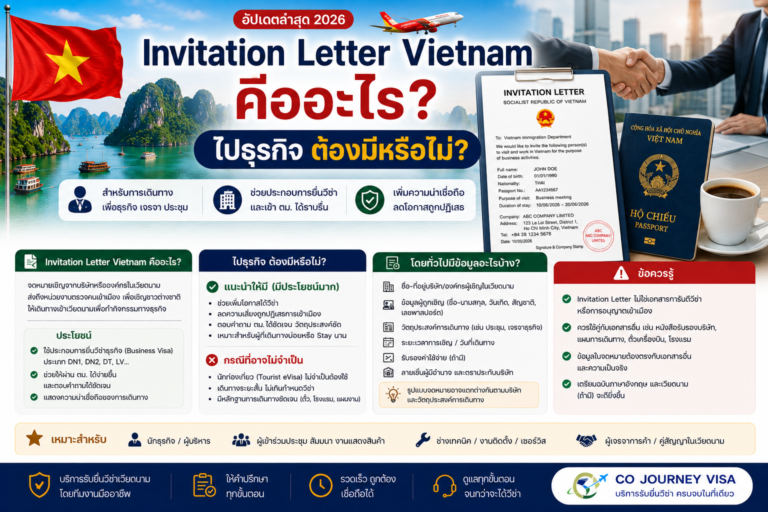
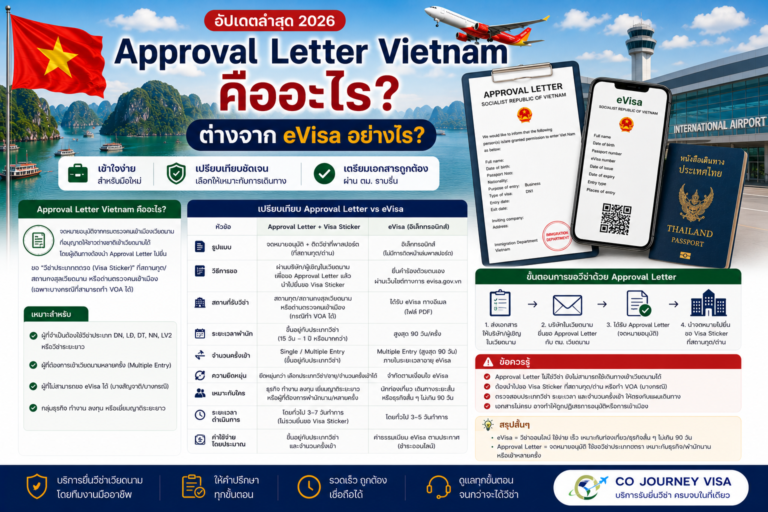
An expat in Bangkok can hold a Thai work permit, retirement extension, DTV, dependent status or another Thai immigration status and still need to answer a completely different question before going to Vietnam: what does the passport being used for the trip require under Vietnamese rules?
Vietnam's standard personal eVisa route is built around the traveller's passport and application details. The official Immigration portal states that applicants must be outside Vietnam, hold a passport or valid international travel document, and not fall into specified entry-suspension or special diplomatic categories. Your residence in Thailand is relevant to the personal information you declare, but it does not turn you into a Thai passport holder for Vietnamese visa purposes.
If you want Co Journey Visa's country-specific service page before reading the full guide, see วีซ่าเวียดนาม. The application itself should always be checked against the latest Vietnam Immigration rules before submission.
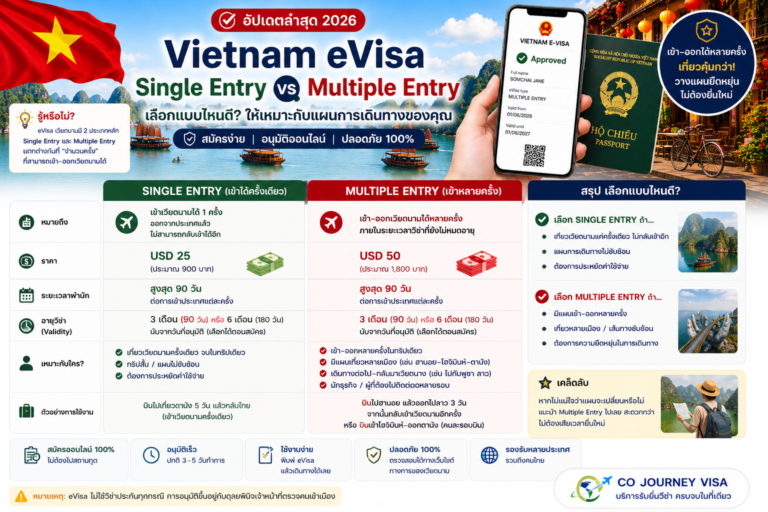
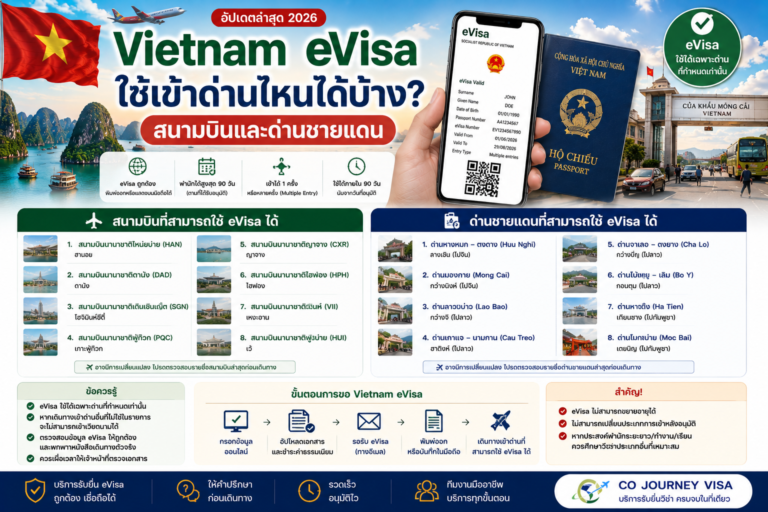
Short answer: An eligible foreign passport holder living in Thailand can generally submit a Vietnam eVisa application while physically outside Vietnam. The official eVisa portal currently states a maximum validity of 90 days with single or multiple entry. As verified on 29 August 2026, the government fee is USD 25 for single entry and USD 50 for multiple entry, and the fee is non-refundable if the visa is not granted. The final visa details and permission to enter remain subject to Vietnamese authorities.
💬 Unsure whether you need an eVisa at all—or whether your itinerary needs single or multiple entry?
Send your nationality, passport type, planned dates and number of Vietnam entries for an initial application review.
1. Does living in Thailand change your Vietnam eVisa eligibility?
Usually, the decisive starting point is not your Thai visa label. Vietnam Immigration's eVisa portal defines the personal route for eligible foreigners who are outside Vietnam and hold a valid passport or international travel document. The application then asks for nationality, passport information, residence/contact information, occupation and travel details.
📌 Practical distinction: Your Thai immigration status explains why you are living in Thailand, but your Vietnamese visa position is assessed under Vietnamese rules using the passport and facts in the application. A British, Indian, Australian, American, Chinese, European or other foreign resident of Thailand should therefore check the rules for the passport actually used to enter Vietnam.
If your question is about maintaining or changing your legal stay in Thailand rather than entering Vietnam, that is a separate matter. See our Thailand Visa information separately so the two immigration systems are not mixed together.
2. Before paying: check whether your passport already has a Vietnam visa exemption
An eVisa is not automatically the first step for every foreigner living in Thailand. Vietnam maintains visa-exemption arrangements for certain nationalities and categories. Those rules can change and may contain limits on permitted stay, passport validity, purpose or other entry conditions.
This means two expats sitting in the same Bangkok office may have different requirements. One passport may qualify for a visa-exempt short visit, while another may need an eVisa before boarding.
Situation
What to verify first
Decision impact
Your passport is covered by a current Vietnam visa exemption
Permitted stay, passport conditions and whether your trip fits the exemption
You may not need to buy an eVisa for that trip.
Your trip is longer than the visa-exempt period available to your passport
Whether an eVisa fits the requested dates and purpose
You may need an eVisa or another lawful immigration route.
You plan to enter Vietnam more than once
Whether multiple entry is necessary
A single-entry eVisa may not match the itinerary.
Your passport or purpose falls into a special category
Vietnam Immigration or Embassy instructions
The standard personal eVisa route may not be the correct channel.
↔ On mobile, swipe left or right to view the full table.
⚠️ Do not assume Thai residence creates Vietnamese visa-free rights. A Thai work permit, DTV, retirement extension or other Thai permission does not replace the need to check the Vietnamese rules that apply to your passport.
3. What does the official Vietnam eVisa application require from an expat in Thailand?
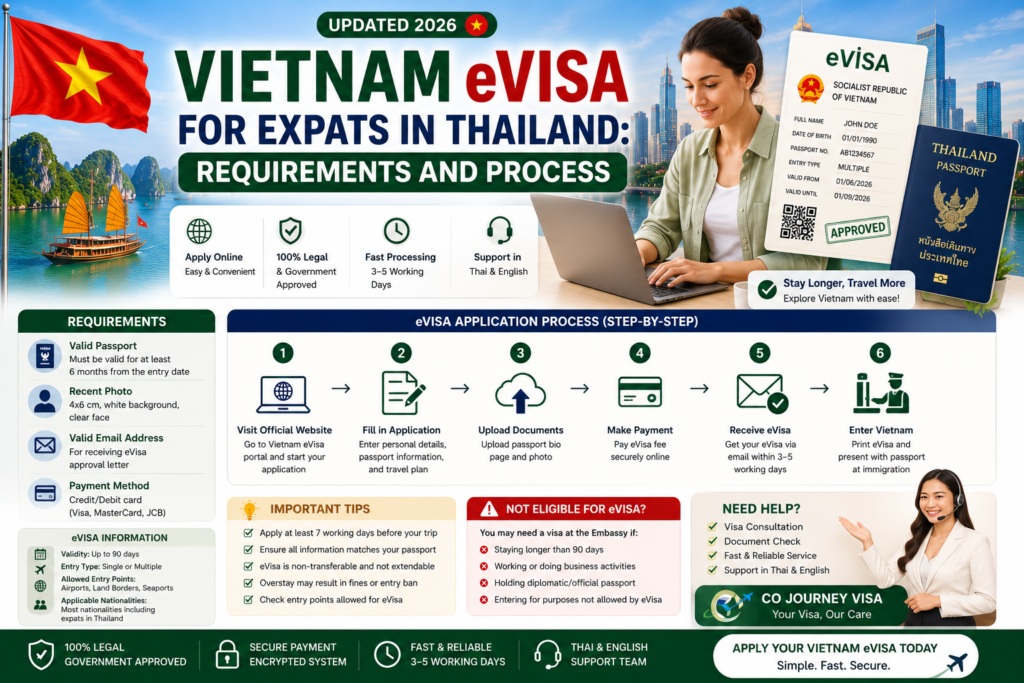
The official personal eVisa form is more detailed than a simple passport upload, but it is still an online application rather than a traditional paper file. The current government form requests identity, passport, contact, residence, occupation and requested visa information, together with applicant images.
Application element
What the official system asks for
Review point
Passport / travel document
Passport number, issue details, expiry and issuing authority
Every character should match the document used for travel.
Passport data-page image
Image of the passport identity page
Use a clear image with the full data page visible.
Portrait photograph
The official instructions describe a straight-facing photograph without glasses
Follow the live portal's current image requirements before upload.
Personal information
Name, date of birth, nationality, sex and other requested identity data
Follow the passport and ICAO-style name information used by the system.
Residential/contact information
Permanent and current contact/residential information as requested
Thailand-based applicants should use truthful current information.
Occupation
Employment or occupation details requested by the form
Do not invent a job or employer to make the application look stronger.
Requested visa information
Single or multiple entry and requested validity dates
Match the request to the real itinerary rather than selecting the longest option automatically.
Travel / entry information
Information required by the live form, including the intended border gate where applicable
Use a Government-designated eVisa checkpoint.
Government fee
USD 25 single entry / USD 50 multiple entry as of 29 August 2026
The official portal states the fee is non-refundable if the visa is not granted.
↔ On mobile, swipe left or right to view the full table.
💡 What is different for expats in Thailand? The standard personal eVisa form does not list a Thai visa or work permit as one of the core image uploads. It does, however, ask for personal, residential/contact and occupation information. If your case falls outside the normal personal eVisa route, follow the additional instructions from Vietnam Immigration or the Vietnamese Embassy rather than assuming the standard form is enough.
4. Vietnam eVisa process from Thailand: the order that reduces avoidable errors
The official workflow is online: complete the application, pay the fee, then check and receive the result electronically. For an expat in Thailand, the safer way to approach it is to make the route decision before entering data into the form.
1
Check whether you need a visa.
Use the current Vietnamese visa-exemption information for the passport you will actually travel with.
2
Map the complete itinerary.
Count how many times you will enter Vietnam and identify the intended entry and exit points before selecting single or multiple entry.
3
Confirm that the personal eVisa route fits your case.
The official route is for eligible foreigners who are outside Vietnam. Special categories may use another channel.
4
Prepare the passport data page and portrait.
The official instructions require a passport data-page image and a straight-facing photograph without glasses. Follow the live site's current technical limits.
5
Enter identity and passport information exactly.
Check names, passport number, nationality, date of birth and expiry data against the passport rather than typing from memory.
6
Enter truthful residence, occupation and travel details.
Information should describe the applicant's real circumstances; false or dishonest information can cause the application to be denied.
7
Select the requested visa period and entry type.
Do not choose multiple entry merely because it sounds more flexible. Use it when the actual route requires more than one entry.
8
Review before payment.
Passport errors, wrong dates and a route that does not match the selected entry type are more difficult to solve after travel plans are fixed.
9
Pay through the official system and keep the registration information.
The application code, registered email and other requested information are used to check the result.
10
Check the result and print the issued eVisa.
The official instructions tell approved applicants to print the eVisa for entry and exit.
⏱ Official processing instruction: The Vietnam Immigration application instructions currently state that an eVisa application is processed in 3 working days. Treat this as the stated processing period, not a promise that every case will be ready for a fixed flight. Build in additional time for corrections or further review.
If your route is still changing, prepare a truthful Travel Plan before locking in the requested visa dates. The purpose is not to manufacture a story; it is to make sure the application and the actual journey describe the same trip.
⚡ Have flights in mind but are still uncertain about dates, entry type or border gate?
A review before payment can catch inconsistencies while they are still easy to correct.
5. Single-entry vs multiple-entry: the decision should follow your border movements
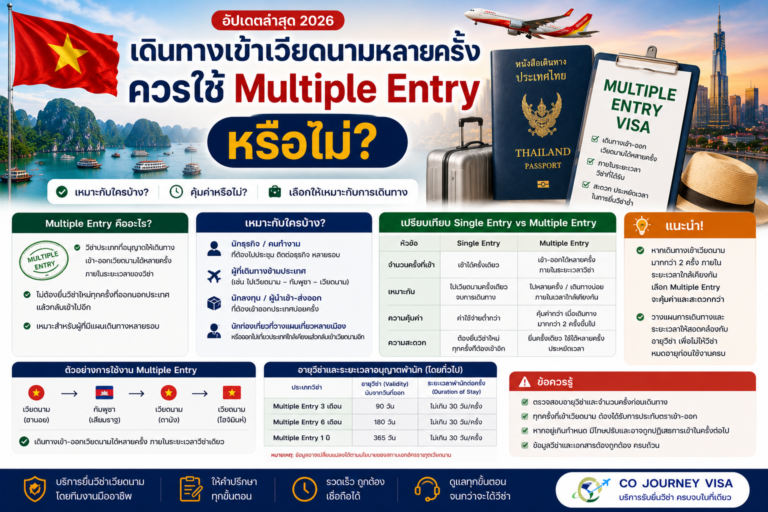
Vietnam Immigration currently states that eVisas may be issued for a maximum of 90 days and can be single or multiple entry. The important phrase is entry type: leaving Vietnam and later returning is a new entry.
✈️ Bangkok → Hanoi → Bangkok
One Vietnam entry. If you otherwise need a visa, a single-entry eVisa may match this simple itinerary.
🔁 Bangkok → Ho Chi Minh City → Bangkok → Da Nang
Two Vietnam entries. A multiple-entry eVisa may be necessary if both trips fall within the issued validity period and you require a visa.
🌏 Thailand → Vietnam → Cambodia → Vietnam
Returning from Cambodia creates another Vietnam entry. This is a common itinerary where selecting single entry without checking the route can cause a problem.
🗓 90 days is a maximum visa validity
It does not mean every applicant must request or will necessarily need the full 90-day window. Use the dates shown on the issued eVisa as the controlling document.
6. Which mistakes create the most risk for Thailand-based applicants?
The eVisa is convenient because it removes many paper steps, but that convenience shifts more responsibility to the applicant. The system relies heavily on what you type and upload.
Mistake
Why it matters
What to do instead
Name does not follow the passport
The issued visa may not correspond cleanly with the travel document presented at check-in or immigration.
Follow the passport and the form's name-format instructions exactly.
Wrong passport number
The visa is linked to the passport information entered in the application.
Compare each character directly with the passport before payment.
Single entry selected for a two-entry itinerary
Leaving Vietnam can consume the only entry before the traveller plans to return.
Draw the route country by country before choosing the entry type.
Using a non-designated checkpoint
The official portal states that eVisa entry and exit is limited to Government-designated international border gates.
Check the current official checkpoint list before submission and travel.
Using an unofficial lookalike website
You may expose passport and payment information to a commercial or fraudulent site.
Start from Vietnam Immigration's official eVisa domain.
Applying too close to departure
Even with a stated processing period, corrections or additional review can affect travel timing.
Apply with a practical buffer rather than treating the published period as a guaranteed deadline.
Entering information that is not true
Vietnam Immigration's declaration instructions state that dishonest information can result in denial.
Use real passport, residence, occupation and travel information throughout.
↔ On mobile, swipe left or right to view the full table.
❌ A complete form is not the same as a reliable application. If the passport, requested dates, entry type and actual itinerary contradict one another, the file can still be weak even though every mandatory field has something typed into it. Never invent employment, residence, travel or booking information to make an application appear stronger.
7. Three expat scenarios: same country of residence, different visa decisions
Scenario A: A UK passport holder based in Bangkok taking a short holiday
The first task is not to open the eVisa payment page. It is to check the current visa-exemption policy for that passport and trip. If the journey fits an exemption, purchasing an eVisa may be unnecessary.
Scenario B: An Indian passport holder working in Thailand and making one Vietnam trip
The applicant should check the eVisa route for the Indian passport, prepare the passport data page and portrait, and make sure the requested validity covers the real travel dates. The Thai work permit explains the applicant's circumstances in Thailand but does not replace the Vietnamese visa requirement.
Scenario C: A regional consultant living in Thailand and entering Vietnam twice
Here, the number of border crossings matters more than the applicant's Thai residence status. If the traveller enters Vietnam, leaves for another country and then returns to Vietnam, the application should be checked for multiple entry and the relevant designated checkpoints.
💡 The case logic: “Expat in Thailand” describes where the applicant lives. It does not, by itself, answer whether a Vietnam eVisa is required. Nationality, passport, trip length, number of entries, purpose and entry point still have to be checked separately.
8. After approval: check the eVisa before you leave Thailand
Do not treat the approval email as the end of the process. Before travelling, compare the issued eVisa with the passport in your hand and the route you are actually taking.
Confirm the full name against the passport.
Confirm the passport number character by character.
Check the visa validity dates.
Check whether the eVisa is single or multiple entry.
Confirm that your planned entry and exit points are currently on the Government-designated eVisa checkpoint list.
Print the approved eVisa as instructed by Vietnam Immigration.
Keep your actual accommodation and onward-travel information available in case it is requested.
🛬 Pre-arrival information in 2026: Vietnam Immigration's current eVisa portal recommends that passengers complete the official pre-arrival form before entry. The Vietnamese Embassy in Thailand announced in June 2026 that the initial PAI pilot at Tan Son Nhat International Airport was encouraged rather than mandatory. Because implementation can evolve, check the live Immigration instructions immediately before travel.
⚠️ Visa issuance is not the same as guaranteed admission. Travellers must still satisfy Vietnamese entry rules at the border. Co Journey Visa can assist with application preparation and consistency checks, but the competent Vietnamese authorities make visa and entry decisions.
9. Official sources to check before submitting a Vietnam eVisa from Thailand
This is a fact-freshness section, not a list of optional reading. Fees, exemption rules, application fields, checkpoint lists and entry procedures can change, so the final check should always be made against official Vietnamese sources.
🇻🇳 Vietnam Immigration Department — Official eVisa Portal https://evisa.gov.vn/
Use this for current eVisa eligibility conditions, single/multiple entry, maximum validity, government fee and designated checkpoint information.
🛂 Vietnam National Portal on Immigration — Personal eVisa Application Instructions Official application instructions
The current instructions show the passport data-page and portrait upload, payment process, stated three-working-day processing period and result-checking steps.
🏛 Embassy of Vietnam in Thailand — Visa Information https://vnembassy-bangkok.mofa.gov.vn/visa
Use the Embassy when your case requires consular guidance or does not fit the normal personal eVisa route.
📋 Vietnam Ministry of Foreign Affairs — Visa Exemption Information Official visa-exemption information
Check this before paying for an eVisa if your passport may qualify for a visa exemption.
🛬 Vietnam Immigration — Pre-arrival Information https://prearrival.immigration.gov.vn/
Use only the official Immigration domain if following current pre-arrival instructions.
⚠️ Fact freshness: This article was reviewed against official Vietnamese government sources on 29 August 2026. Recheck the live official pages before you submit and again before departure, especially for fees, visa exemptions, application fields, checkpoint lists and arrival procedures.
10. When does a Vietnam eVisa application review become useful?
A straightforward applicant who clearly understands the route can often complete the online form personally. Review becomes more useful when the risk comes from interpretation rather than typing—for example, deciding which visa route fits, how many entries are needed, which dates to request, or which checkpoint should be selected.
Your nationality may qualify for visa exemption but your itinerary is longer or more complex.
You are travelling Thailand → Vietnam → another country → Vietnam.
You recently renewed your passport or have more than one nationality.
Your passport name format is complex and you are unsure how to enter it.
Your travel dates changed after you began the application.
You are using a land or sea border and want to confirm that it is currently designated for eVisa use.
You have already entered incorrect information and need to decide the appropriate next step before travelling.
Co Journey Visa's visa service can help review the route and information before submission. The service helps organise and check the application; it does not change the facts of the case or control the decision of Vietnam Immigration.
⭐ How Co Journey Visa can help with this specific application
Route check — review whether the traveller should first consider visa exemption, eVisa or another official route.
Passport-data check — compare key application fields with the passport used for travel.
Single vs multiple-entry review — map the itinerary to the number of planned Vietnam entries.
Date and checkpoint review — check whether the requested visa period and intended border gate fit the real trip.
Application consistency — identify contradictions between residence, occupation, itinerary and passport information before submission.
Official-source escalation — identify when the applicant should rely on Vietnam Immigration or the Vietnamese Embassy for a special case.
We assist with preparation and review. Visa issuance and permission to enter Vietnam remain the responsibility of the competent Vietnamese authorities.
Can expats living in Thailand apply for a Vietnam eVisa?
Generally, yes. Vietnam Immigration's official eVisa portal accepts personal applications from eligible foreigners who are outside Vietnam, hold a passport or valid international travel document, and are not subject to entry suspension. Living in Thailand does not by itself create a separate Vietnam eVisa category.
Do I need a Thai visa or work permit to submit the standard Vietnam eVisa application?
The standard personal eVisa form focuses on passport, identity, contact, residential, occupation and travel information, and its core image uploads are a portrait and passport data page. A Thai visa or work permit is not listed as one of those core image uploads, although applicants must provide truthful information and special cases may require additional evidence or consular guidance.
How long can a Vietnam eVisa be valid?
Vietnam Immigration states that an eVisa may be valid for a maximum of 90 days and may be issued for single or multiple entry. The actual validity and entry type are the details shown on the visa that is issued.
How much is the Vietnam eVisa government fee in 2026?
As verified on the official Vietnam eVisa portal on 29 August 2026, the government fee is USD 25 for a single-entry eVisa and USD 50 for a multiple-entry eVisa. The portal states that the fee is non-refundable if the visa is not granted.
How long does the official Vietnam eVisa process take?
The official Vietnam Immigration application instructions state that an eVisa application is processed in three working days. This should be treated as the stated processing period rather than a guarantee that every case will be completed on a particular travel deadline.
Can I enter Vietnam through any airport or land border with an eVisa?
No. Vietnam Immigration states that eVisa holders must enter and exit through international border gates designated by the Government for eVisa use. Check the current official list before submitting the application and again before travel.
Do I need to visit the Vietnamese Embassy in Bangkok for a normal eVisa application?
A standard personal eVisa application is designed to be completed online, including application, payment and result checking. Applicants whose passport category, purpose or circumstances fall outside the normal eVisa route should follow Vietnam Immigration guidance or contact the Vietnamese Embassy in Thailand.
📌 What a Thailand-based expat should remember before applying
Start with the passport and Vietnamese rules, not the label of your Thai visa.
Check whether a current visa exemption already covers your planned trip.
The official eVisa portal currently states a maximum validity of 90 days with single or multiple entry.
As of 29 August 2026, the official government fee is USD 25 for single entry and USD 50 for multiple entry.
The official application instructions currently state a processing period of three working days, but travellers should still leave buffer time.
The standard application uses a portrait and passport data-page image and asks for identity, residence/contact, occupation and travel information.
Use only Government-designated eVisa entry/exit checkpoints.
Recheck the official portal before submission and before travel because rules and procedures can change.
Before you submit, make sure the visa request matches the trip you will actually take
Send your nationality, passport type, intended travel dates, number of Vietnam entries and proposed checkpoint. Co Journey Visa can help review the application logic and identify what should be checked with the official authorities before submission.