Best Thailand Visa for Long Stay: DTV, LTR, Thailand Privilege, Retirement, Marriage, Student, Work Visa, and Long-Stay Checklist
You want to stay in Thailand for more than a quick holiday — maybe six months, one year, or even several years. Then the visa options start to feel confusing: DTV, LTR, Retirement Visa, Thailand Privilege, Marriage Visa, Student Visa, Business Visa, Work Visa, and more.
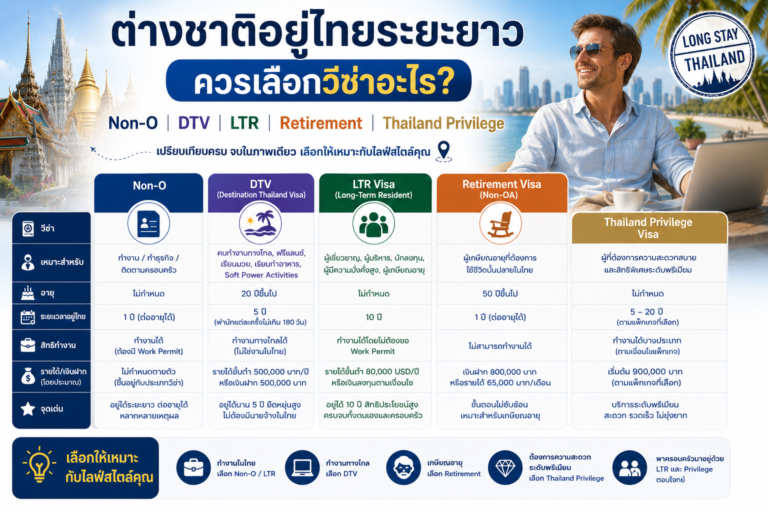
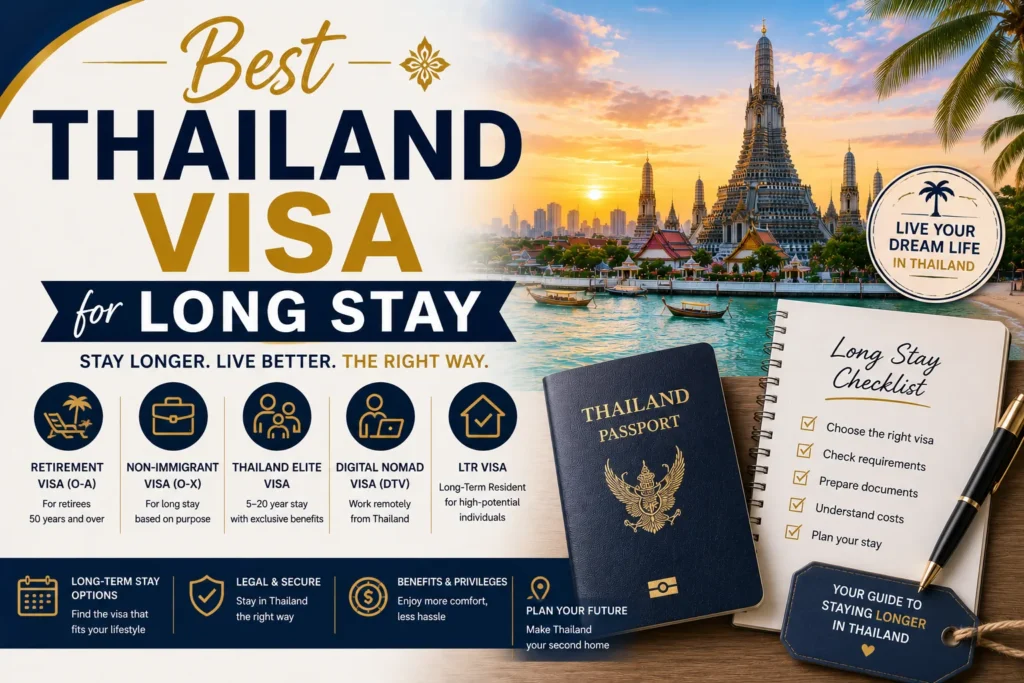
The best Thailand visa for long stay depends on your real purpose. Digital nomads often look at DTV. High-income professionals may consider LTR. Retirees aged 50 or above may compare retirement routes. Foreign spouses of Thai citizens may look at marriage-based stay. Lifestyle long-stay residents may consider Thailand Privilege. Foreigners working for Thai employers usually need a Non-B visa and work permit.
From our visa handling experience, the biggest mistake is choosing the visa with the longest name or longest validity without checking work rights, renewal burden, financial proof, family rules, and long-term compliance.
What Is the Best Thailand Visa for Long Stay?
There is no single best visa for everyone
The best Thailand visa for long stay is the visa that matches your real reason for staying. A visa that works well for a retiree may be wrong for a digital nomad. A visa that suits a foreign spouse may not help someone who wants to work. A paid lifestyle membership may be convenient, but it may not be the most cost-effective choice if you qualify for another route.
Official requirements, fees, validity, permitted stay, financial rules, and work conditions can change. You can check official long-stay options through the Thai e-Visa official website, the official BOI LTR Visa website, the official Thailand Privilege website, and the Ministry of Foreign Affairs Non-Immigrant O-A retirement visa page.
| Profile | Likely Visa Routes | Practical Caution |
|---|---|---|
| Digital nomad or freelancer | DTV or LTR if qualified | Must prove remote work and financial readiness |
| Retiree aged 50+ | Retirement Visa, LTR Pensioner, Thailand Privilege | Retirement stay does not automatically allow work |
| Foreign spouse of Thai citizen | Marriage Visa / Non-O | Relationship and financial proof must be prepared carefully |
| Foreign employee | Non-B Visa + Work Permit | Employer documents are critical |
| Lifestyle long-stay resident | Thailand Privilege | Membership fee is significant and not a general work visa |
DTV Visa for Digital Nomads and Flexible Long Stay
Best for remote workers, freelancers, soft power activities, and eligible dependents
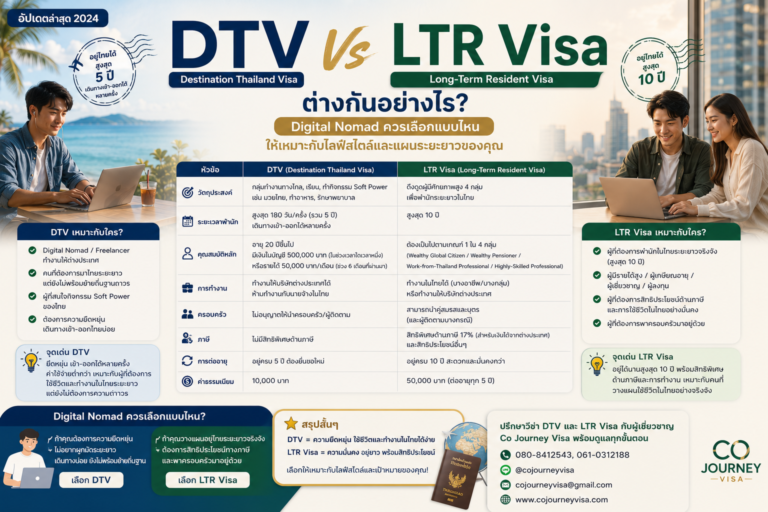
The Destination Thailand Visa, or DTV, is often one of the most relevant long-stay options for digital nomads, remote workers, freelancers, foreign talent, and soft power activity participants.
Official Thai Embassy guidance lists DTV as multiple-entry, with visa validity of 5 years and period of stay up to 180 days per entry. Some official guidance also refers to extension possibilities through Immigration, but applicants should always check the latest rules before planning a continuous stay.
| DTV Factor | Practical Meaning | Common Weak Point |
|---|---|---|
| 5-year validity | The visa can support repeated long-stay planning | Applicants assume it means continuous 5-year stay |
| 180 days per entry | Stay period is tied to each entry stamp | Forgetting to check the admitted-until date |
| Financial proof | Shows ability to support the stay | Sudden deposits or unclear bank screenshots |
| Workcation proof | Shows remote worker, freelancer, or eligible activity status | Only saying “I work online” without evidence |
LTR Visa for High-Potential Long-Stay Applicants
Best for qualified wealthy applicants, pensioners, remote professionals, and skilled experts
Thailand’s Long-Term Resident Visa, or LTR, is designed for selected high-potential foreigners. The official BOI LTR website describes a renewable 10-year visa structure, with permission initially granted for 5 years and extendable for another 5 years if qualifications are met.
LTR may be powerful for applicants who meet strict criteria, but it is not the easiest route for everyone. From real client cases, the challenge is usually not the concept of LTR; it is proving income, employer profile, professional background, insurance, investment, or category-specific qualifications clearly.
| LTR Category | Best For | Practical Caution |
|---|---|---|
| Wealthy Global Citizen | High-asset applicants | Asset and investment evidence must be strong |
| Wealthy Pensioner | Qualified retirees with pension or income profile | Pension and insurance requirements should be checked early |
| Work-from-Thailand Professional | Remote professionals working for foreign employers | Employer profile and income proof are often key |
| Highly Skilled Professional | Experts in targeted sectors | Qualification and employer/sector documents matter |
Thailand Privilege Visa for Lifestyle Long Stay
Best for applicants who want a paid membership route
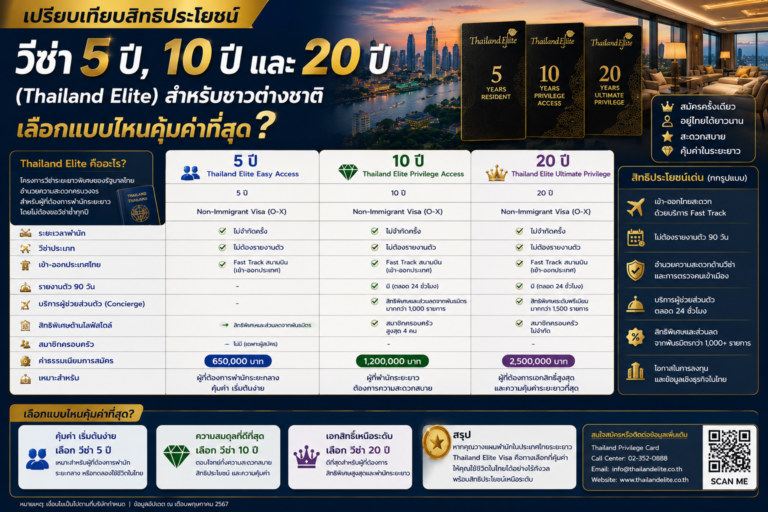
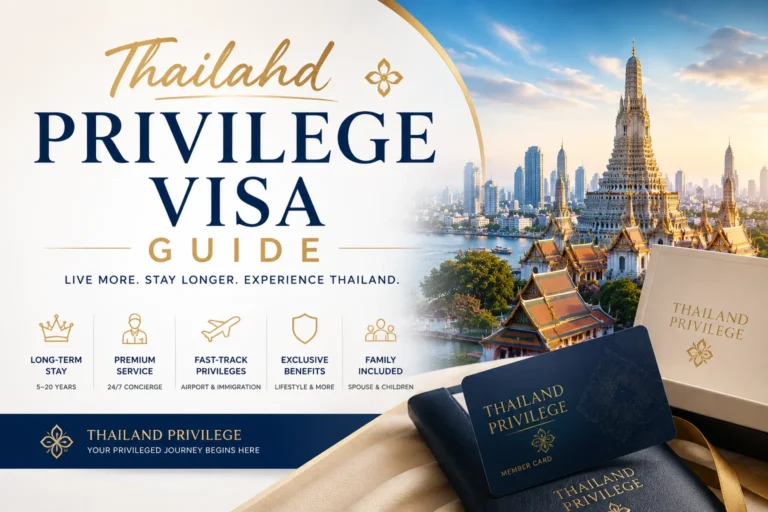
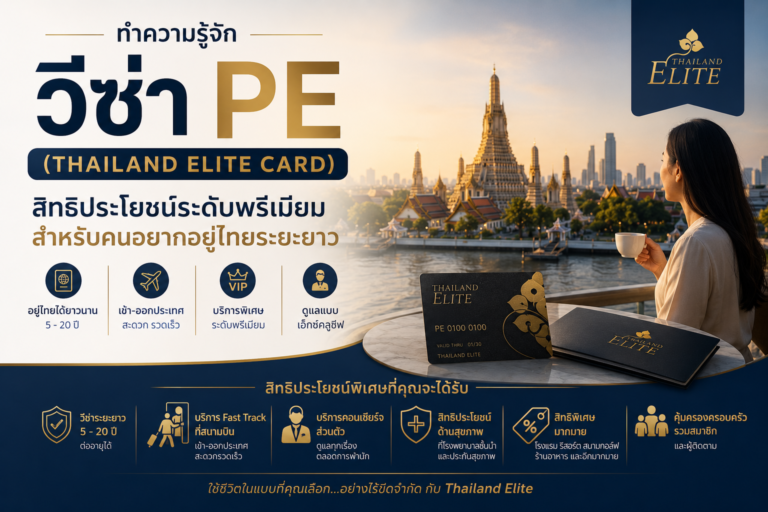
Thailand Privilege may suit foreigners who want a lifestyle-based long-stay option and prefer a paid membership route instead of qualifying through retirement, marriage, work, or professional criteria.
The official Thailand Privilege website currently lists packages such as Bronze at 650,000 THB for 5 years, Gold at 900,000 THB for 5 years, and Platinum at 1,500,000 THB for 10 years. Package details, benefits, and fees can change, so always check the official website before payment.
| Package | Current Official Fee | Validity | Practical Caution |
|---|---|---|---|
| Bronze | 650,000 THB | 5 years | Lowest entry cost but limited benefits |
| Gold | 900,000 THB | 5 years | Check whether you will use lifestyle privileges |
| Platinum | 1,500,000 THB | 10 years | Higher upfront fee requires long-term planning |
Retirement Visa for Long Stay in Thailand
Best for retirees aged 50 years and over
Retirement routes may fit applicants aged 50 or above who want to stay in Thailand for retirement without working. The Ministry of Foreign Affairs states that Non-Immigrant O-A applicants must be aged 50 years and over on the date of application.
From our visa handling experience, retirement routes can be practical and cost-effective, but applicants must prepare financial evidence, insurance or health-related requirements where applicable, renewal timing, bank letters, passbook updates, 90-day reporting, and re-entry planning.
| Retirement Route Factor | Why It Matters | Practical Tip |
|---|---|---|
| Age 50+ | Core eligibility factor for retirement routes | Check age rule before preparing documents |
| Financial proof | Shows retirement support capacity | Prepare bank timing carefully |
| No work intention | Retirement stay is not an employment route | If you want to work, review another route |
| Annual maintenance | Renewal and reporting must be tracked | Set reminders months ahead |
Marriage, Student, Guardian, and Work Routes
Best when your long stay is based on family, education, or employment
Not every long-stay case is about retirement or remote work. Some applicants stay because they are married to a Thai citizen, studying in Thailand, accompanying a child at school, or working for a Thai employer.
From real client cases, these routes can work well when the supporting documents are strong. But they become risky when applicants choose them only because they look easier, not because the purpose is genuine.
| Route | Best For | Main Caution |
|---|---|---|
| Marriage Visa / Non-O | Foreign spouse of Thai citizen | Marriage proof and financial documents matter |
| ED Visa | Genuine students | Attendance and school documents may be checked |
| Guardian Visa / Non-O | Parent or guardian of student in Thailand | Usually linked to child’s school status and documents |
| Non-B + Work Permit | Foreigners working for Thai employers | Do not start work before work authorization |
How to Choose the Best Thailand Visa for Long Stay
Step 1: Define your main purpose
Write one honest sentence: “I want to retire in Thailand,” “I want to work remotely for overseas clients,” “I am married to a Thai citizen,” or “I will work for a Thai company.” This sentence should guide the visa route.
Step 2: Check whether you need work permission
Long stay does not always mean work permission. If you will work for a Thai employer, serve Thai clients, teach, consult, manage operations, or earn Thai-source income, review the work permit route carefully.
Step 3: Compare validity and real stay pattern
DTV has 5-year validity but stay is structured around entries. LTR has a renewable 10-year framework for qualified applicants. Thailand Privilege uses membership validity. Retirement and marriage routes often involve annual extension planning.
Step 4: Check financial and document requirements
Before choosing a route, confirm whether you can prove the requirement. Weak financial proof, unclear work documents, missing family records, or incomplete employer documents can make the wrong route expensive.
Step 5: Think about renewal and maintenance
Getting approved once is not enough. Consider 90-day reporting, annual extensions, re-entry permits, TM30 records, financial balance timing, school attendance, employer compliance, insurance, and family documents.
Thailand Long-Stay Visa Decision Checklist
| Question | Why It Matters | Best Direction | Done |
|---|---|---|---|
| Are you working remotely for foreign clients or employer? | Determines digital nomad route | DTV or LTR | ☐ |
| Are you working for a Thai company? | Requires work authorization | Non-B + Work Permit | ☐ |
| Are you aged 50 or older and retired? | Opens retirement routes | Retirement Visa or LTR Pensioner | ☐ |
| Are you married to a Thai citizen? | Supports family-based stay | Marriage Visa / Non-O | ☐ |
| Do you want a paid lifestyle route? | Avoids some qualification routes | Thailand Privilege | ☐ |
| Do you have high income, assets, or investment? | May qualify for LTR | LTR Visa | ☐ |
| Are you studying? | Requires school support | ED Visa | ☐ |
| Can you maintain the visa requirements? | Prevents future problems | Choose realistic route | ☐ |
Approved Case vs Risky Case: What Made the Difference?
From real client cases, the best visa is the one the documents can honestly support
| Topic | Risky Case | Stronger Case |
|---|---|---|
| Purpose | Applicant chooses visa by longest validity only | Visa route matches real purpose of stay |
| Work rights | Applicant uses lifestyle or tourist route while planning local work | Work permit route is reviewed before starting work |
| Financial proof | Applicant chooses route but cannot prove financial requirement | Bank, income, pension, or membership budget is confirmed early |
| Maintenance | Applicant ignores renewals, reporting, and re-entry rules | Visa maintenance calendar is planned before approval |
Common Mistakes When Choosing a Thailand Long-Stay Visa
1. Choosing by duration only
A 5-year or 10-year visa may sound better, but only if the route fits your purpose and you can maintain the requirements.
2. Using tourist entries as a long-stay plan
Tourist visas and visa exemption are useful for short visits, but they are not a strong long-term residence strategy.
3. Ignoring work rights
Many long-stay visas do not automatically allow employment. Long stay and work permission are separate questions.
4. Assuming DTV is right for every digital nomad
DTV is useful for many remote workers, but applicants still need financial proof and clear workcation, digital nomad, freelancer, soft power, or dependent documents.
5. Choosing Thailand Privilege without comparing alternatives
Thailand Privilege can be convenient, but it is a paid membership route. Compare LTR, retirement, marriage, or work-based routes first.
6. Underestimating retirement renewal rules
Retirement routes may look simple, but financial timing, bank letters, passbook updates, reporting, and re-entry permits matter.
7. Forgetting family members
A visa that works for the main applicant may not automatically cover spouse, children, parents, or guardians. Check dependent rules early.
Summary: Best Thailand Visa for Long Stay
Key points to remember:
- There is no single best Thailand visa for everyone.
- The right visa depends on purpose, income source, age, family status, work plan, budget, and maintenance requirements.
- DTV may fit digital nomads, remote workers, freelancers, soft power activities, and eligible dependents.
- LTR may fit qualified wealthy applicants, pensioners, remote professionals, highly skilled professionals, and dependents.
- Thailand Privilege may fit lifestyle long-stay residents who prefer a paid membership route.
- Retirement routes may fit applicants aged 50 years and over who do not intend to work.
- Marriage-based stay may fit foreign spouses of Thai citizens with proper relationship and financial documents.
- Non-B and work permit are usually needed for foreigners working for Thai employers.
- Tourist entries are not a strong long-term residence strategy.
- Always check the latest official requirements before preparing documents or paying fees.
Let Co Journey Visa help compare your Thailand long-stay visa options
A strong long-stay visa decision should make your case clear: why you want to stay, how you will support yourself, whether you need work permission, how long you plan to stay, and whether you can maintain the visa requirements.
ทำไมควรให้ Co Journey Visa ช่วยดูแลวีซ่าของคุณ
การขอ Thailand Long-Stay Visa อาจมีขั้นตอนที่ซับซ้อนและต้องการความแม่นยำในการเตรียมเอกสาร หากคุณไม่ต้องการให้เกิดความผิดพลาดและต้องการความสะดวกสบายในการดำเนินการ Co Journey Visa พร้อมให้บริการช่วยเหลือคุณในทุกขั้นตอน:
Frequently Asked Questions About the Best Thailand Visa for Long Stay
What is the best Thailand visa for long stay?
There is no single best visa for everyone. For digital nomads, DTV may fit. For high-income professionals, LTR may fit. For retirees, retirement visa may fit. For lifestyle stay, Thailand Privilege may fit. For Thai employment, Non-B and work permit are usually needed.
Is DTV good for long stay in Thailand?
Yes, DTV can be suitable for many digital nomads, remote workers, freelancers, soft power participants, and eligible dependents. Official guidance lists DTV as a 5-year multiple-entry visa with a stay period of up to 180 days per entry.
Is LTR better than DTV?
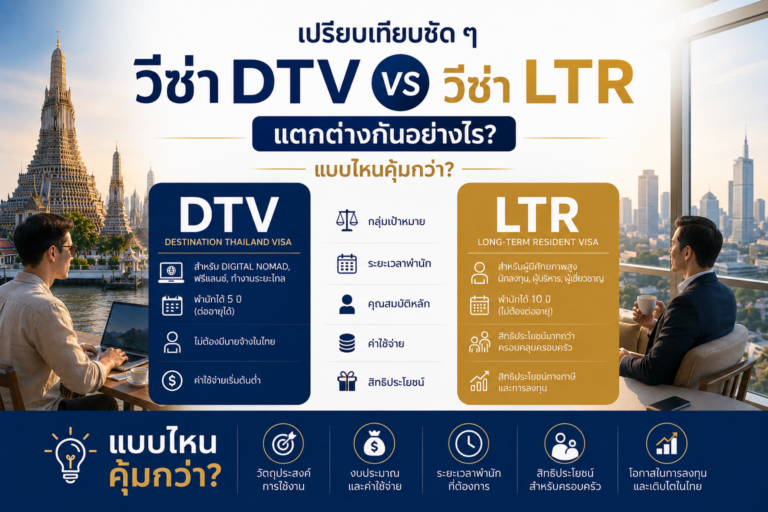
It depends on your profile. LTR has a stronger long-term structure and benefits, but it has stricter income, employer, investment, pension, or professional requirements. DTV is often more practical for freelancers and digital nomads who do not meet LTR criteria.
Is Thailand Privilege worth it for long stay?
Thailand Privilege may be worth it if you want a paid lifestyle-based long-stay route and do not want to rely on retirement, marriage, work, study, or LTR qualifications. However, it should be compared with other routes before paying the membership fee.
What is the best long-stay visa for retirees in Thailand?
Retirees aged 50 or above often compare Non-O retirement extension, Non-OA, LTR Wealthy Pensioner, and Thailand Privilege. The best route depends on age, financial proof, insurance requirements, renewal comfort, and whether the applicant wants a paid membership route.
Can I work in Thailand on a long-stay visa?
Not always. Many long-stay visas do not automatically allow employment. If you work for a Thai employer or perform local work in Thailand, you may need a Non-B visa and work permit.
Can I stay in Thailand long-term with tourist visas?
Tourist visas are not designed as a long-term residence strategy. They may work for short visits, but repeated tourist entries can create uncertainty. If Thailand is your base, consider a long-stay route that matches your purpose.
Which Thailand visa is best for a family moving to Thailand?
It depends on the family structure. If one parent works for a Thai employer, Non-B and dependent routes may apply. If a child studies in Thailand, student and guardian routes may apply. If the main applicant qualifies for LTR or Thailand Privilege, dependents may be possible under those programs.