
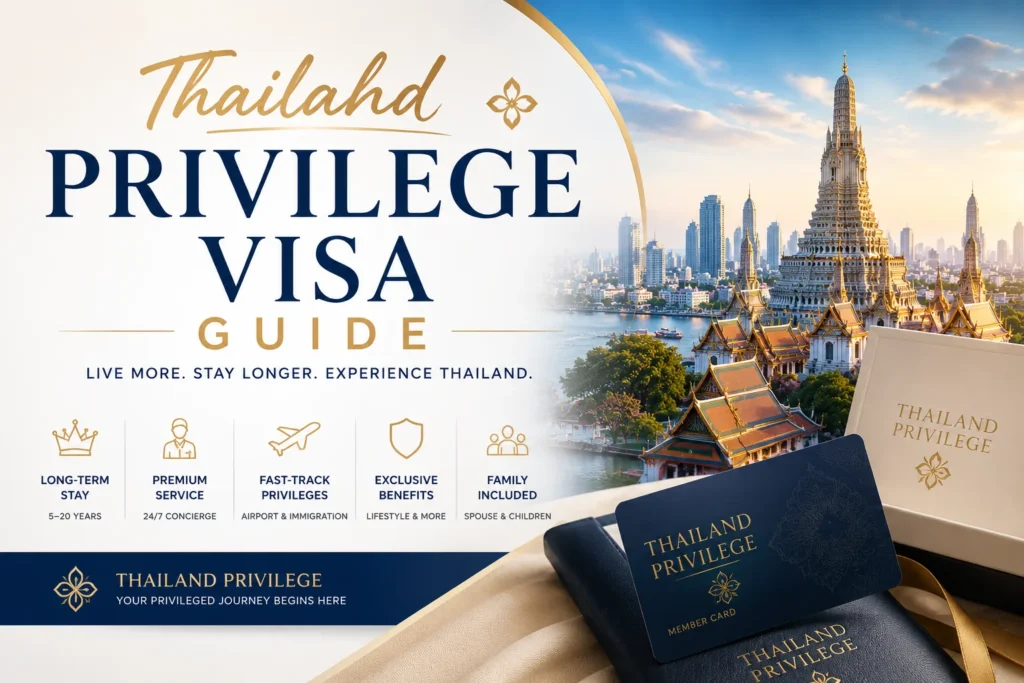
Thailand Privilege Visa Guide: Membership Fees, Benefits, Packages, 90-Day Reporting, Work Rules, and Application Checklist
You want to live in Thailand long-term without renewing short visas again and again, but you may not fit neatly into retirement, marriage, work, student, or LTR visa rules. Then you find the Thailand Privilege Visa — attractive, convenient, and long-term, but costly enough that you should understand the details before paying.
Thailand Privilege Visa, formerly known by many people as Thailand Elite Visa, is a long-stay membership program that offers 5 to 20 years of Thailand stay privileges depending on the package.
From our visa handling experience, many applicants do not struggle because Thailand Privilege is difficult to understand. They struggle because they choose the wrong package, assume it allows work, forget 90-day reporting, or compare only the headline membership fee without checking long-term fit.
What Is the Thailand Privilege Visa?
A long-stay membership program, not a normal visa application
Thailand Privilege Visa is a long-stay membership route managed through Thailand Privilege Card Co., Ltd. It is designed for foreigners who want a more convenient long-term stay in Thailand without relying on repeated tourist entries or frequent short visa renewals.
The program is often still called Thailand Elite Visa, but the current official branding is Thailand Privilege. The official Thailand Privilege website currently lists membership tiers including Bronze, Gold, Platinum, Diamond, and Reserve.
| Thailand Privilege Package | Best For | Practical Caution |
|---|---|---|
| Bronze | Applicants wanting the lowest-cost entry into the program | No annual privilege points |
| Gold | Long-stay visitors who want lifestyle benefits | Check whether you will actually use the points |
| Platinum | People planning Thailand as a 10-year base | Higher upfront fee requires long-term planning |
| Diamond | Premium long-term residents and frequent travelers | Best value only if benefits are used regularly |
| Reserve | Invitation-only premium members | Not available as a standard open application |
Official sources to check before applying
Thailand Privilege package rules, membership fees, benefits, reporting procedures, and application conditions can change. You can check the latest information from the official Thailand Privilege website, the official membership package comparison page, and the official Thailand Privilege vs LTR comparison page.
Thailand Privilege Visa Packages and Membership Fees
Do not compare packages by price alone
The official Thailand Privilege website currently lists package fees from 650,000 THB to 5,000,000 THB depending on tier. However, the cheapest package is not always the best choice, and the most expensive package is not always necessary.
From real client cases, the best package decision usually depends on four things: how long you want to stay, how often you travel, whether you need lifestyle benefits, and whether your family members also need a long-stay plan.
| Package | Membership Fee | Validity | Privilege Points |
|---|---|---|---|
| Bronze | 650,000 THB | 5 years | 0 points/year |
| Gold | 900,000 THB | 5 years | 20 points/year |
| Platinum | 1,500,000 THB | 10 years | 35 points/year |
| Diamond | 2,500,000 THB | 15 years | 55 points/year |
| Reserve | 5,000,000 THB | 20 years | 120 points/year |
Thailand Privilege Visa Benefits
The real value is convenience, predictability, and long-term planning
Thailand Privilege is attractive because it can reduce the stress of repeated short-stay visa renewals. For many applicants, the value is not only the visa length, but also the smoother entry support, membership assistance, airport-related services, and lifestyle privileges depending on package level.
From our visa handling experience, Thailand Privilege is often considered by retirees, frequent travelers, remote lifestyle residents, families, business owners who do not need local employment permission, and people who want Thailand as a long-term base.
| Benefit | Why It Matters | Practical Caution |
|---|---|---|
| Long-stay membership | Useful for foreigners who want Thailand as a long-term base | Membership validity and actual stay stamp must both be tracked |
| Multiple-entry convenience | Good for frequent travelers | Passport validity still matters |
| Airport and assistance services | Can make arrival and departure smoother | Benefit level depends on package and current rules |
| Lifestyle privileges | May add value for members who use services often | Do not overpay for benefits you will not use |
Can You Work in Thailand With Thailand Privilege Visa?
Long stay and work permission are not the same thing
This is one of the most important points. Thailand Privilege is mainly a long-stay lifestyle and convenience program. It is not a general work visa.
The official Thailand Privilege comparison page states that members can only work if they apply for the Flexible Plus Program, which requires a minimum investment of USD 1 million in the Thai economy. If your plan involves working for a Thai company, managing local operations, providing services in Thailand, or actively earning income inside Thailand, you should review the correct work visa and work permit route before relying on Thailand Privilege.
| Situation | Risk Level | Recommended Action |
|---|---|---|
| Living in Thailand without working locally | Usually lower risk | Still check reporting, stay stamp, and address records |
| Working for a Thai employer | High risk if no work permit | Review Non-B visa and work permit route |
| Running a Thai business actively | Needs careful review | Check company structure, visa type, and work permission |
| Considering Flexible Plus | Requires investment planning | Review official requirements before committing funds |
90-Day Reporting and Stay Extension Rules
A long visa does not remove every immigration duty
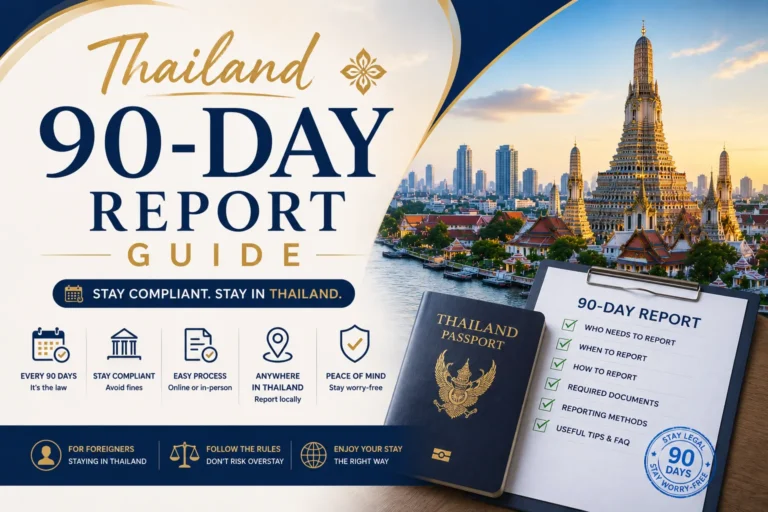
Thailand Privilege members still need to follow immigration rules. The official Thailand Privilege guidance states that 90-day reporting is required if a member stays in Thailand continuously for more than 90 days.
Members should also track their permitted stay stamp carefully. In some cases, stay extension procedures may be needed depending on entry, stay period, and current immigration instructions.
| Immigration Duty | Why It Matters | Practical Tip |
|---|---|---|
| 90-day reporting | Required for continuous stay over 90 days | Set calendar reminders before the due date |
| Stay stamp tracking | Your actual permitted stay date controls your legal stay | Check the stamp every time you enter Thailand |
| TM.30 address record | Often relevant for immigration services | Keep residence documents organized |
| Passport validity | Can affect visa affixation and stay permission | Renew passport early if validity is short |
How to Apply for Thailand Privilege Visa
Step 1: Decide whether Thailand Privilege fits your purpose
Before comparing packages, clarify your purpose. Thailand Privilege may fit if you want Thailand mainly as a long-term lifestyle base. If your real purpose is employment, active business management, study, permanent residence, or family-based stay, another route may be more suitable.
Step 2: Compare membership packages
Compare Bronze, Gold, Platinum, Diamond, and Reserve based on validity, price, privilege points, lifestyle benefits, travel frequency, and long-term plans. Do not choose only by the lowest fee.
Step 3: Prepare personal documents
Typical documents may include passport copy, photo, personal information, current visa or stay record if already in Thailand, and additional documents requested for screening. Requirements can change, so always follow official instructions from Thailand Privilege or the authorized representative handling your case.
Step 4: Submit application and background screening
Thailand Privilege applications normally involve background screening. From real client cases, name spelling, passport details, nationality, date of birth, visa history, and previous stay records should be consistent across documents.
Step 5: Receive approval and pay membership fee
After approval, the applicant pays the membership fee for the selected package. Because the fee is significant, confirm the package, validity, benefits, refund conditions, and family rules before payment.
Step 6: Arrange visa affixation or entry process
The visa process may differ depending on whether you are outside Thailand, already in Thailand, entering through an international airport, or changing from another stay status. Follow the official instruction carefully.
Step 7: Track immigration duties after approval
After receiving the visa, you still need to monitor passport validity, entry stamp, permitted stay date, 90-day reporting, TM.30 address record, extension timing, and membership expiry.
Thailand Privilege Visa Checklist
| Item | Why It Matters | Practical Tip | Done |
|---|---|---|---|
| Purpose of stay | Determines whether Thailand Privilege is suitable | Separate lifestyle stay from work plans | ☐ |
| Correct package | Controls validity, fee, and benefits | Compare cost per year and actual benefit use | ☐ |
| Passport | Main identity document | Check validity before applying | ☐ |
| Current visa history | May affect screening and process route | Review overstays, cancellations, and old entries | ☐ |
| Budget | Membership fee is paid upfront | Confirm total cost before payment | ☐ |
| Work plan | Thailand Privilege is not a general work visa | Check Non-B, LTR, Flexible Plus, or work permit route | ☐ |
| Family plan | May affect package and cost | Check spouse, children, parents, or partner rules early | ☐ |
| 90-day reporting plan | Required for long continuous stays | Set reminders before due dates | ☐ |
| TM.30/address record | Often needed for immigration procedures | Keep rental, hotel, or residence proof ready | ☐ |
| Stay extension tracking | Actual permitted stay date matters | Check your stamp after every entry | ☐ |
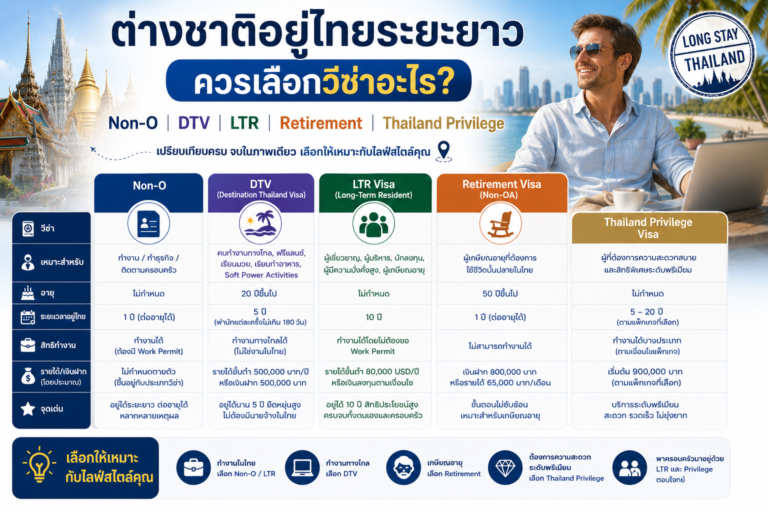
Thailand Privilege Visa vs LTR, DTV, Retirement Visa, Non-B, and Marriage Visa
The best long-stay visa depends on your real profile
Thailand Privilege is not automatically better or worse than other long-stay options. It is best understood as a membership-based lifestyle route. Other visas may be cheaper, more suitable for work, better for family settlement, or more appropriate for applicants who meet qualification-based criteria.
| Visa Route | Best For | Main Benefit | Main Caution |
|---|---|---|---|
| Thailand Privilege | Lifestyle long-stay residents and frequent travelers | Long-stay membership with service convenience | Not a general work visa |
| LTR Visa | High-income professionals, investors, skilled experts, wealthy pensioners | Qualification-based long stay with work-related benefits in some cases | Strict eligibility and documentation |
| DTV Visa | Digital nomads, freelancers, soft power participants | Flexible stay pattern for eligible activities | Different from long-stay membership and not a broad work permit |
| Retirement Visa | Foreigners aged 50+ meeting financial rules | Often more affordable for retirees | Annual renewal and financial timing matter |
| Non-B + Work Permit | Foreigners working for Thai employers | Correct route for legal employment | Employer documents and work permit are required |
| Marriage Visa | Foreign spouse of a Thai citizen | Family-based stay | Requires relationship proof and financial documents |
Approved Case vs Rejected or Risky Case: What Made the Difference?
From real client cases, the strongest applications start with fit assessment
| Topic | Rejected or Risky Case | Stronger Case |
|---|---|---|
| Purpose of stay | Applicant wants to work locally but chooses Thailand Privilege only because it is convenient | Work plan is reviewed before choosing Thailand Privilege, Non-B, LTR, or another route |
| Package selection | Applicant chooses the cheapest package without checking long-term needs | Package is selected based on stay duration, benefits, family plan, and travel pattern |
| Document consistency | Name spelling, passport details, and visa history are inconsistent | All personal data is checked before submission |
| Post-approval planning | Applicant forgets 90-day reporting and stay stamp tracking | Reporting, TM.30, passport validity, and extension dates are tracked early |
Common Thailand Privilege Visa Mistakes
1. Thinking Thailand Privilege is a work visa
This is the most serious mistake. Thailand Privilege supports long stay, but it does not automatically allow employment or active business work in Thailand.
2. Choosing a package only by price
Bronze has the lowest entry cost, but no annual privilege points. A higher package may be more suitable for frequent travelers or long-term residents who will actually use benefits.
3. Ignoring 90-day reporting
Long membership validity does not remove the reporting duty. Members staying continuously in Thailand for more than 90 days must handle reporting according to immigration rules.
4. Forgetting the permitted stay stamp
Some members look only at membership validity and forget the actual stay date stamped in the passport. Always check your entry stamp after arrival.
5. Assuming it leads to permanent residence
Thailand Privilege is a long-stay membership program. It is not the same as Thai permanent residence and does not automatically lead to citizenship.
6. Not comparing with other visa routes
Some applicants pay for Thailand Privilege even though they may qualify for LTR, retirement visa, marriage visa, DTV, or Non-B. A comparison before payment can save significant cost.
7. Not checking family rules early
Family plans can change the best package choice. If spouse, children, parents, or partner stay plans are involved, check current rules before selecting the package.
Summary: Thailand Privilege Visa
Key points to remember:
- Thailand Privilege Visa is a long-stay membership program, formerly known by many people as Thailand Elite Visa.
- Current official membership packages include Bronze, Gold, Platinum, Diamond, and Reserve.
- Membership validity can range from 5 to 20 years depending on package level.
- Membership fees currently range from 650,000 THB to 5,000,000 THB depending on tier.
- The main value is long-stay convenience, service support, and predictable planning.
- Thailand Privilege is not a general work visa.
- Members may still need 90-day reporting if staying continuously in Thailand for more than 90 days.
- Applicants should compare Thailand Privilege with LTR, DTV, retirement visa, marriage visa, and Non-B before paying.
- Package choice should be based on real stay duration, benefit use, work plan, family needs, and budget.
- Always check the latest official Thailand Privilege rules before submitting documents or making payment.
Let Co Journey Visa help prepare your Thailand Privilege Visa application
A good Thailand Privilege decision should answer more than one question: whether the program fits your purpose, which package makes sense, whether your work plan creates risk, what documents should be prepared, and what immigration duties you must track after approval.
ทำไมควรให้ Co Journey Visa ช่วยดูแลวีซ่าของคุณ
การขอ Thailand Privilege Visa อาจมีขั้นตอนที่ซับซ้อนและต้องการความแม่นยำในการเตรียมเอกสาร หากคุณไม่ต้องการให้เกิดความผิดพลาดและต้องการความสะดวกสบายในการดำเนินการ Co Journey Visa พร้อมให้บริการช่วยเหลือคุณในทุกขั้นตอน:
Frequently Asked Questions About Thailand Privilege Visa
What is Thailand Privilege Visa?
Thailand Privilege Visa is a long-stay membership program for foreigners who want to stay in Thailand for several years with visa-related convenience and member benefits. It was formerly known by many people as Thailand Elite Visa.
How much does Thailand Privilege Visa cost?
The official Thailand Privilege website currently lists membership fees from 650,000 THB for Bronze to 5,000,000 THB for Reserve. Package fees may change, so applicants should check the official Thailand Privilege website before payment.
How long can I stay with Thailand Privilege Visa?
Membership validity depends on the package. Current official packages include 5-year, 10-year, 15-year, and 20-year options. Members should still check their actual entry stamp, permitted stay date, and extension requirements.
Can I work in Thailand with Thailand Privilege Visa?
Not automatically. Thailand Privilege is not a general work visa. The official Thailand Privilege comparison page states that members can only work if they apply for the Flexible Plus Program, which requires a minimum investment of USD 1 million in the Thai economy.
Do Thailand Privilege members need 90-day reporting?
Yes, if they stay in Thailand continuously for more than 90 days. Thailand Privilege members should monitor their reporting due dates and follow Immigration reporting rules.
Is Thailand Privilege Visa better than LTR Visa?
It depends on your profile. Thailand Privilege is membership-based and may fit lifestyle long-stay residents. LTR Visa is qualification-based and may fit high-income professionals, investors, skilled experts, and wealthy pensioners who meet strict criteria.
Is Thailand Privilege Visa the same as permanent residence?
No. Thailand Privilege Visa is a long-stay membership program. It is not Thai permanent residence and does not automatically lead to citizenship.
What documents are needed for Thailand Privilege Visa?
Typical documents may include passport copy, photo, personal information, current visa or stay record if already in Thailand, and any additional documents requested during screening. Requirements can change, so applicants should follow official instructions before submission.
หากคุณต้องการคำแนะนำเพิ่มเติมหรือต้องการให้ Co Journey Visa ดูแลการยื่นวีซ่าของคุณ ติดต่อเราได้เลย 24 ชั่วโมง
บทความที่เกี่ยวข้อง
ติดตามข้อมูลวีซ่าอัปเดตจาก Co Journey Visa
เพิ่มเว็บไซต์นี้เป็นแหล่งข้อมูลที่ต้องการใน Google เพื่อให้ค้นพบบทความจากเราได้สะดวกขึ้น