

Best Thailand Visa for Families: DTV, LTR, Thailand Privilege, Student Visa, Guardian Visa, Dependent Visa, Work Route, Documents, and Checklist
Planning a move to Thailand as one person is already confusing. Planning it with a spouse, children, school admissions, housing, health insurance, work questions, and travel schedules can feel like solving three visa cases at the same time.
The best Thailand visa for families depends on who the main applicant is and why the family is moving. Remote-worker families may consider DTV. High-income families may compare LTR. Families with school-age children may need ED and guardian planning. Families with a Thai-employed parent may need Non-B and dependent visas. Lifestyle families may compare Thailand Privilege.
From our visa handling experience, families usually face problems when they choose a visa for one parent only, forget the spouse or children, pay school fees before checking visa support, or assume dependent status automatically allows work.
What Is the Best Thailand Visa for Families?
There is no single best visa for every family
A family visa plan usually starts with one question: who is the main applicant? That person’s visa often determines the rest of the family’s route.
For official guidance, you can check the Royal Thai Consulate-General Los Angeles DTV page, the official BOI LTR Visa website, the official Thailand Privilege website, and official Non-O dependent guidance such as the Royal Thai Embassy Phnom Penh Non-O family/dependent page.
| Family Situation | Likely Visa Options | Main Caution |
|---|---|---|
| Remote-worker family | DTV | Must prove workcation purpose, finances, and family relationship |
| High-income family | LTR Visa | Strict main applicant and dependent criteria |
| Children studying in Thailand | ED Visa + Guardian / Non-O route | School documents are critical |
| One parent works for Thai company | Non-B + Work Permit + dependents | Employer documents must be strong |
| Lifestyle long-stay family | Thailand Privilege | Higher upfront membership cost |
DTV Visa for Remote-Worker Families
Best for families where the main applicant works remotely
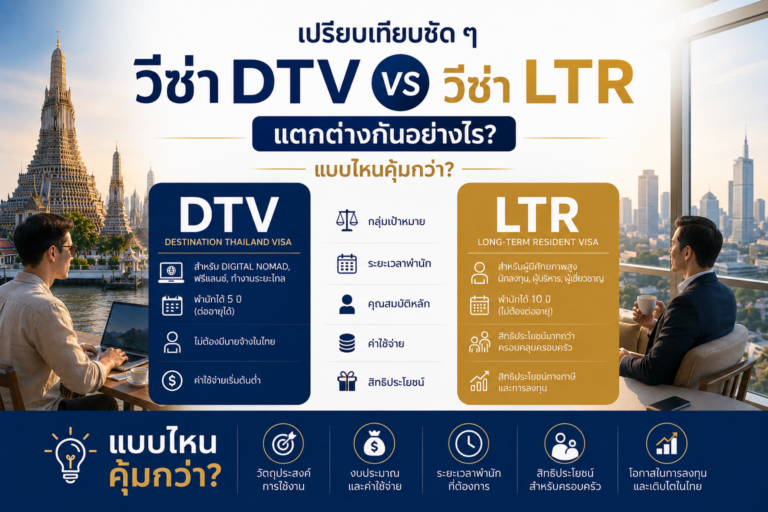
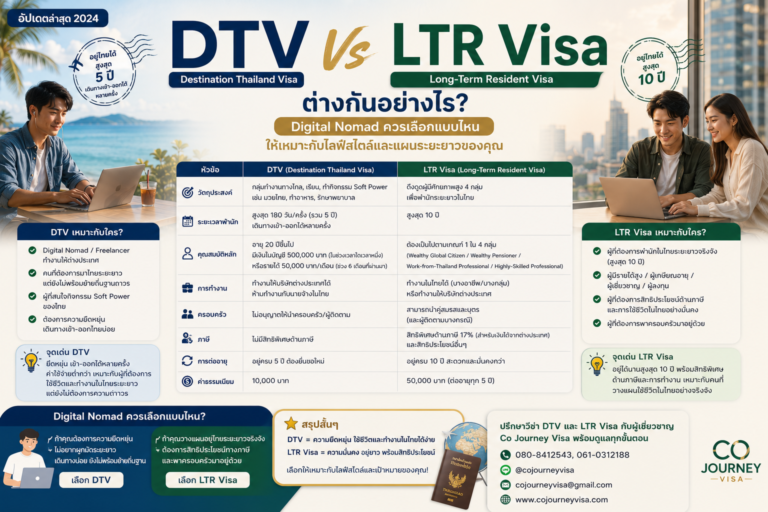
DTV may suit digital nomad and remote-worker families. Official Thai consular guidance lists DTV purposes including workcation for digital nomads, remote workers, foreign talent, and freelancers, and also includes spouse and children under 20 years old of DTV visa holders.
From real client cases, DTV family files become stronger when the main applicant clearly proves overseas income, remote work, financial readiness, and legal family relationship.
| DTV Family Item | Why It Matters | Practical Tip |
|---|---|---|
| Main applicant work proof | Shows workcation eligibility | Use contract, employer letter, portfolio, invoices, or payment records |
| Financial evidence | Shows ability to support the family stay | Avoid unclear screenshots or sudden unexplained deposits |
| Marriage certificate | Proves spouse relationship | Translate or legalize if required by the embassy |
| Birth certificates | Proves parent-child relationship | Prepare certified translations where needed |
LTR Visa for High-Income or High-Qualification Families
Best for families with a strong main applicant
LTR may suit high-income or high-qualification families. BOI states that spouse and children under 20 years old of LTR visa holders may apply as dependents, with a maximum of four dependents in total per one LTR visa holder.
From our visa handling experience, LTR is powerful but document-heavy. Families should screen the main applicant first before collecting dependent documents.
| LTR Family Factor | Why It Matters | Practical Tip |
|---|---|---|
| Main applicant category | Determines whether dependents can follow | Screen income, assets, employer, pension, or professional profile first |
| Dependent limit | LTR has a maximum dependent structure | Check family size before choosing LTR |
| Children under 20 | Age affects dependent eligibility | Adult children may need another route |
| Health insurance or financial security | Often relevant for LTR dependents | Review policy wording and coverage early |
Thailand Privilege Visa for Lifestyle Families
Best for families who prefer a paid membership route
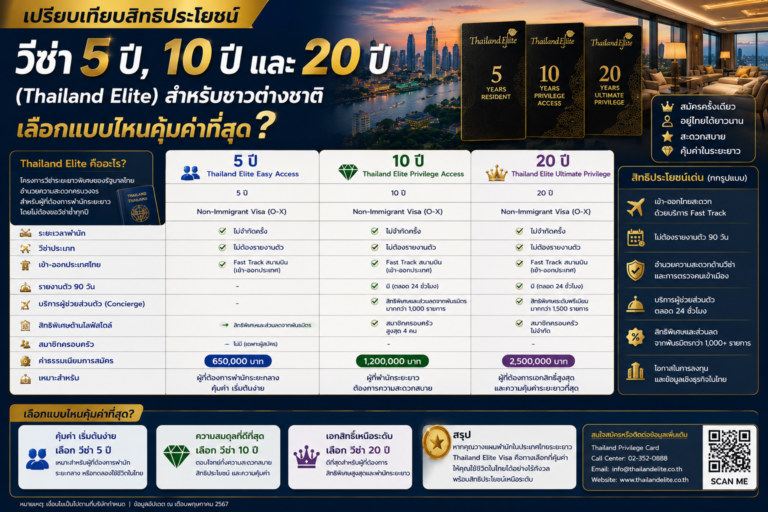
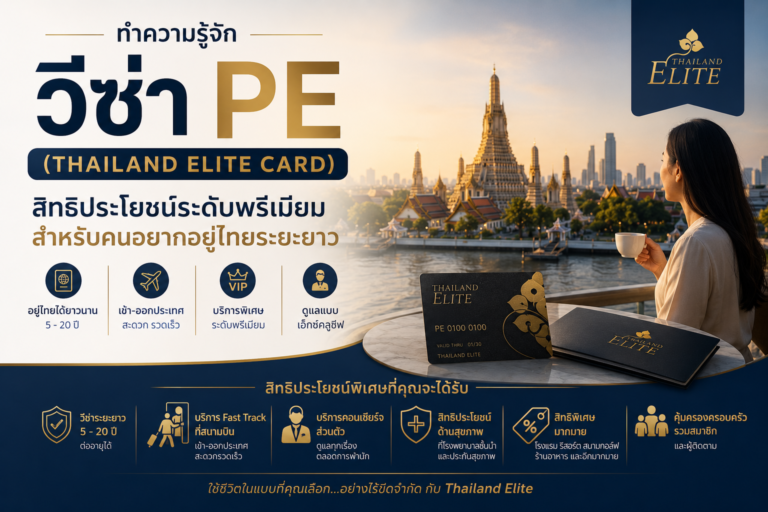
Thailand Privilege may suit families that want paid long-stay convenience and prefer a membership-based structure. The official Thailand Privilege website explains that each approved family member receives their own membership ID and visa privileges.
This route may be attractive for families who do not fit DTV, LTR, retirement, marriage, work, or school-based routes. However, it should be compared carefully because the upfront cost can be high.
| Thailand Privilege Factor | Family Benefit | Main Caution |
|---|---|---|
| Paid membership | Can reduce qualification complexity | Budget must be reviewed for every family member |
| Individual membership ID | Each approved family member receives own privileges | Relationship documents still matter |
| Lifestyle convenience | Useful for families who travel often | Not a general work visa |
Student Visa and Guardian Visa for Families with Children in School
The school can become the center of the visa plan
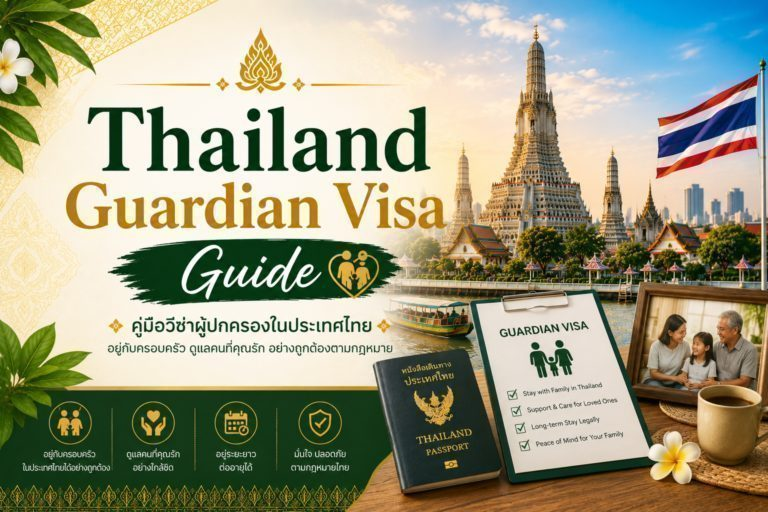
If children will study in Thailand, the child may need a student visa, often under an education route. A parent may then need a guardian or accompanying-family route depending on the school, child’s age, embassy rules, and Immigration office practice.
From common family cases, one of the biggest mistakes is paying a school deposit first and asking about visa support later. Some schools are academically strong but not experienced with international student and guardian documentation.
| School Visa Question | Why It Matters | Ask Before Paying |
|---|---|---|
| Can the school issue visa support documents? | Student visa depends on school paperwork | Ask for sample document list |
| Can the school support guardian documents? | Parent route may depend on school confirmation | Ask which parent can apply and how |
| Which Immigration office handles the case? | Local practice can affect documents | Ask the school’s visa officer directly |
| How often are documents renewed? | Families need a renewal calendar | Check term dates and school holidays |
Non-O Dependent Visa for Accompanying Family Members
Useful when one family member already has a strong Thailand status
Official Thai Embassy guidance describes Non-Immigrant O family/dependent visas as being issued to applicants who wish to accompany spouse or family members who work, study, or live in Thailand.
This route can be useful when one parent works for a Thai company, one child studies in Thailand, or one spouse already has a qualifying stay. The key is proving both the main person’s valid status and the family relationship.
| Dependent Case | Documents Usually Matter | Common Weak Point |
|---|---|---|
| Spouse follows working parent | Marriage certificate, main applicant work status, visa/work permit documents | Main applicant documents are incomplete |
| Child follows working parent | Birth certificate, parent work status, school or residence plan | Birth certificate not translated or certified |
| Parent follows child student | Child school documents, birth certificate, guardian documents, financial proof | School cannot support parent documents clearly |
How to Choose the Best Thailand Visa for Your Family
Step 1: Map every family member
List parent 1, parent 2, every child, grandparents if joining, unmarried partner if relevant, and stepchildren if relevant. For each person, note age, nationality, relationship, purpose of stay, school plan, work plan, and expected length of stay.
Step 2: Identify the strongest main applicant
The strongest main applicant may be a remote worker, Thai-employed parent, child accepted by school, spouse of a Thai citizen, retiree aged 50+, LTR-qualified professional, or Thailand Privilege member.
Step 3: Match dependents to the main route
Check who can join under the main applicant’s route. DTV and LTR commonly focus on spouse and children under 20. Thailand Privilege uses membership structure. Non-O dependent routes depend on the main person’s status and relationship proof.
Step 4: Check school and work plans separately
A child’s school plan may create an ED and guardian structure. A parent’s work plan may require Non-B and work permit review. Do not assume a family visa solves work permission.
Step 5: Compare cost over 1, 3, and 5 years
A visa that looks cheap for one person may become expensive for a family of four. Compare visa fees, dependent fees, membership fees, school document costs, extension costs, insurance, re-entry permits, and renewal burden.
Family Visa Planning Checklist
| Question | Why It Matters | Practical Tip | Done |
|---|---|---|---|
| Who is the main applicant? | Determines dependent options | Choose the strongest visa basis | ☐ |
| Is anyone working in Thailand? | Work may need separate permission | Do not rely on dependent status | ☐ |
| Are children studying? | School may drive the visa route | Confirm school visa support | ☐ |
| Are children under 20? | Age affects dependent eligibility | Check DTV and LTR dependent rules | ☐ |
| Are parents legally married? | Spouse status needs legal proof | Prepare marriage certificate | ☐ |
| Are there custody issues? | Immigration may require proof | Prepare custody or consent documents early | ☐ |
| Is remote work involved? | DTV or LTR may fit | Keep contracts and income proof | ☐ |
| Will the family travel often? | Re-entry permits may be needed | Plan before school holidays | ☐ |
Approved Case vs Delayed Case: What Made the Difference?
From real client cases, the strongest family plan covers everyone from the beginning
| Topic | Risky Case | Stronger Case |
|---|---|---|
| Main applicant | Family chooses the easiest visa for one parent only | Family maps every member before choosing the route |
| School plan | School deposit is paid before checking visa support | School visa documents are confirmed before payment |
| Relationship documents | Birth or marriage certificates are missing translations | Legal documents are translated, certified, and consistent |
| Work permission | Dependent spouse starts working locally | Work permit route is reviewed before any work begins |
Common Mistakes Families Make
1. Choosing a visa for one parent only
A route that works for one parent may not cover the spouse, children, adult children, grandparents, or stepchildren. Family planning should cover everyone from the start.
2. Assuming children automatically follow the parents
Children usually need their own visa status. They may be dependents, students, or part of another family route depending on the case.
3. Paying school fees before checking visa support
Schools vary in visa support experience. Ask for the school’s visa document process before paying large deposits.
4. Assuming dependent status allows work
Dependent status usually supports stay, not employment. If a spouse or parent plans to work, work authorization should be reviewed separately.
5. Ignoring age limits
DTV and LTR dependent guidance commonly refers to children under 20. Adult children may need their own visa route.
6. Weak relationship documents
Birth certificates, marriage certificates, custody documents, name-change documents, translations, and legalization should be prepared carefully.
7. Forgetting re-entry and reporting
Families often travel during school holidays. Before leaving Thailand, check re-entry permits, visa validity, extension dates, TM30, and 90-day reporting where applicable.
Summary: Best Thailand Visa for Families
Key points to remember:
- There is no single best Thailand visa for every family.
- The right route depends on the main applicant’s purpose, such as remote work, employment, retirement, marriage, children’s education, investment, or lifestyle stay.
- DTV may suit remote-worker families with spouse and children under 20 as dependents.
- LTR may suit high-income or highly qualified families, with spouse and children under 20 as dependents, subject to BOI rules.
- Thailand Privilege may suit lifestyle families that prefer a paid membership route.
- Children studying in Thailand may need ED visa planning, while a parent may need a guardian or accompanying-family route.
- Non-O dependent routes may support family members accompanying someone who works, studies, or lives in Thailand.
- A family visa does not automatically allow work.
- Relationship documents must be clear, official, translated, and certified where required.
- Always check the latest official requirements before submitting documents or paying fees.
Let Co Journey Visa help plan your Thailand family visa structure
A strong family visa strategy should feel clear and calm: each person has a legal status, documents match, school and work plans are covered, and travel does not accidentally cancel anyone’s stay.
ทำไมควรให้ Co Journey Visa ช่วยดูแลวีซ่าของคุณ
การขอ Thailand Family Visa อาจมีขั้นตอนที่ซับซ้อนและต้องการความแม่นยำในการเตรียมเอกสาร หากคุณไม่ต้องการให้เกิดความผิดพลาดและต้องการความสะดวกสบายในการดำเนินการ Co Journey Visa พร้อมให้บริการช่วยเหลือคุณในทุกขั้นตอน:
Frequently Asked Questions About the Best Thailand Visa for Families
What is the best Thailand visa for families?
There is no single best option. DTV may suit remote-worker families. LTR may suit high-income or highly qualified families. Thailand Privilege may suit lifestyle families with budget. Student and guardian routes may suit families moving for children’s education. Work and dependent routes may suit families where one parent works in Thailand.
Can my spouse and children join me on a DTV?
Yes. Official Thai consular guidance includes spouse and children under 20 years old of DTV visa holders. They need their own applications and relationship documents.
Can family members join an LTR visa holder?
Yes. BOI states that spouse and children under 20 years old of LTR visa holders may apply as dependents, with a maximum of four dependents per LTR holder.
Is Thailand Privilege good for families?
It can be suitable for families that want a paid membership route and long-stay convenience. Thailand Privilege states that each approved family member receives their own membership ID and visa privileges.
What visa do parents need if children study in Thailand?
Children may need a student visa, often under an education route, while a parent may apply for a guardian or accompanying-family visa depending on the school, child’s age, and Immigration rules. Check the school’s visa support before enrolling.
Can a dependent spouse work in Thailand?
Not automatically. A dependent or family visa usually supports stay, not employment. If the spouse wants to work, they should review the work visa and work permit route.
Can adult children join as dependents?
It depends on the visa route. DTV and LTR guidance commonly refers to children under 20. Adult children may need their own visa route.
What documents prove family relationship for Thailand visa applications?
Common documents include marriage certificate, birth certificate, adoption certificate, custody order, name-change certificate, and certified translations or legalization where required. Use official documents, not only family photos or informal letters.
หากคุณต้องการคำแนะนำเพิ่มเติมหรือต้องการให้ Co Journey Visa ดูแลการยื่นวีซ่าของคุณ ติดต่อเราได้เลย 24 ชั่วโมง
บทความที่เกี่ยวข้อง

ติดตามข้อมูลวีซ่าอัปเดตจาก Co Journey Visa
เพิ่มเว็บไซต์นี้เป็นแหล่งข้อมูลที่ต้องการใน Google เพื่อให้ค้นพบบทความจากเราได้สะดวกขึ้น