
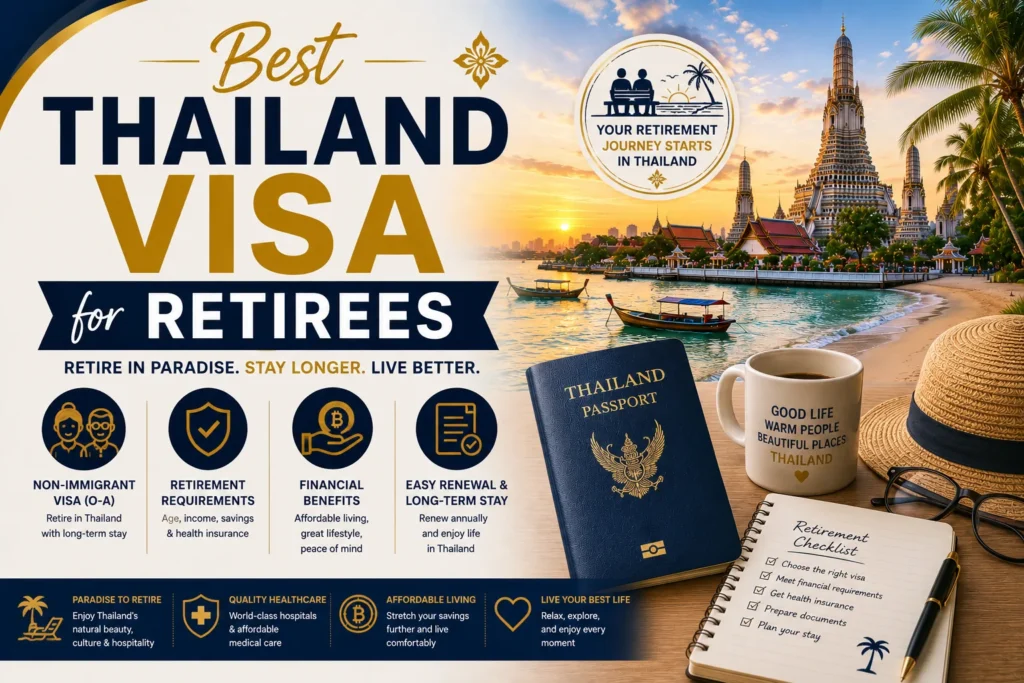
Best Thailand Visa for Retirees: Retirement Visa, Non-O, Non-O-A, LTR Wealthy Pensioner, Thailand Privilege, Costs, Documents, and Checklist
You want to retire in Thailand, but the visa choices start to blur quickly. One person says to use a retirement visa. Another says Thailand Privilege is easier. Someone else mentions LTR Wealthy Pensioner, insurance, bank balances, re-entry permits, and 90-day reporting.
The best Thailand visa for retirees depends on age, income, savings, health insurance, travel frequency, spouse status, and how much paperwork you are willing to handle every year.
From our visa handling experience, the strongest retirement visa plan is not just about getting approved once. It is about choosing a route you can maintain comfortably year after year.
What Is the Best Thailand Visa for Retirees?
There is no single best visa for every retiree
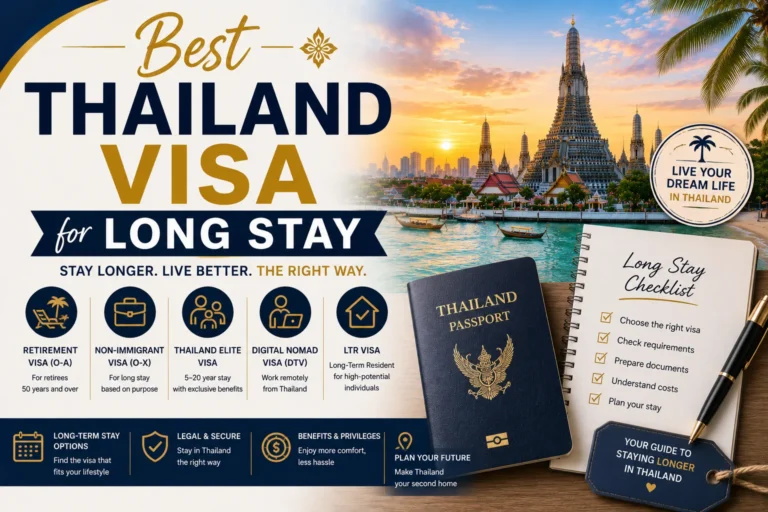
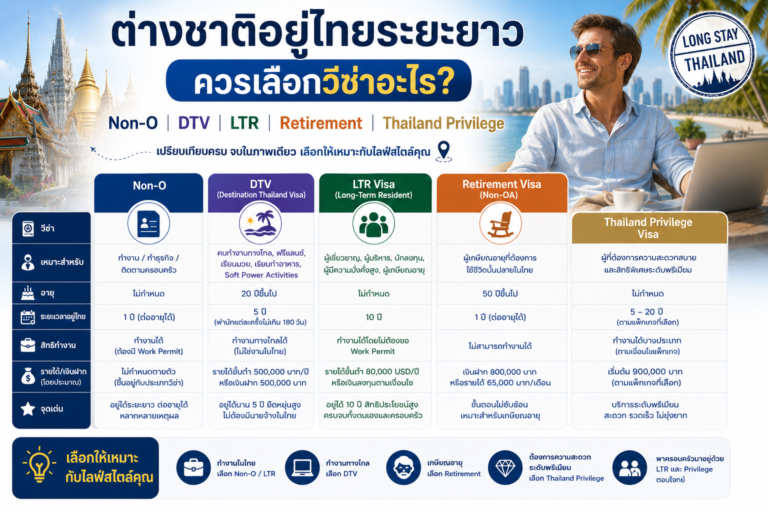
For many retirees aged 50 and over, a standard retirement route such as Non-Immigrant O, Non-Immigrant O-A, or an annual retirement extension may be practical. For higher-income retirees, LTR Wealthy Pensioner may be worth reviewing. For retirees who prefer convenience and can afford a membership fee, Thailand Privilege may be suitable.
You can check official information from the Ministry of Foreign Affairs Non-Immigrant O-A page, the official BOI LTR Visa website, and the official Thailand Privilege website.
| Retiree Profile | Possible Best Fit | Practical Caution |
|---|---|---|
| Age 50+, stable savings | Non-O retirement extension | Bank timing and annual renewal must be managed |
| Age 50+, applying from abroad | Non-O-A Long Stay | Insurance and document rules may apply |
| High-income pensioner | LTR Wealthy Pensioner | Passive income and insurance evidence must be strong |
| Retiree who prefers convenience | Thailand Privilege | High upfront membership fee and no general work rights |
Thailand Retirement Visa Age Requirement
Age 50 is the key starting point
Thailand’s Ministry of Foreign Affairs describes the Non-Immigrant O-A Long Stay visa as available to applicants aged 50 years and over who wish to stay in Thailand for retirement for a period not exceeding one year, without the intention of working.
From real client cases, applicants under 50 often waste time preparing retirement documents before realizing they need another route, such as DTV, LTR under another category, Thailand Privilege, work-based stay, marriage-based stay, or another suitable visa.
Standard Thailand Retirement Visa Routes
Practical for many retirees, but maintenance matters
Standard retirement routes may suit retirees who are aged 50 or older, do not intend to work, can maintain financial proof, and are comfortable with renewal, reporting, and re-entry planning.
From our visa handling experience, the problem is often not first approval. Problems appear during renewal when the bank balance timing is wrong, the bank letter is outdated, the passport is close to expiry, or the retiree forgot a re-entry permit before travel.
| Route | Best For | Main Caution |
|---|---|---|
| Non-O Retirement | Retirees planning annual extension in Thailand | Financial proof and renewal discipline matter |
| Non-O-A Long Stay | Applicants aged 50+ applying from abroad | Insurance and document requirements should be checked early |
| Non-O-X | Eligible nationalities seeking longer retirement structure | Limited nationalities and stricter conditions |
LTR Wealthy Pensioner for High-Income Retirees
Stronger long-term structure, stricter qualification
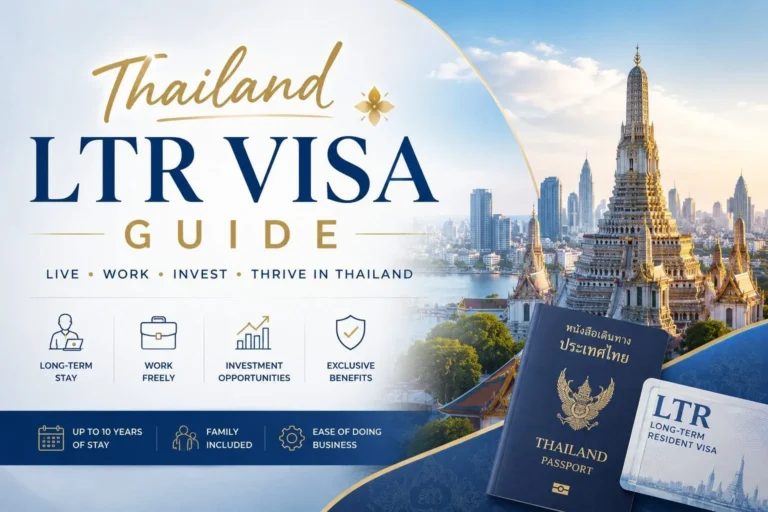
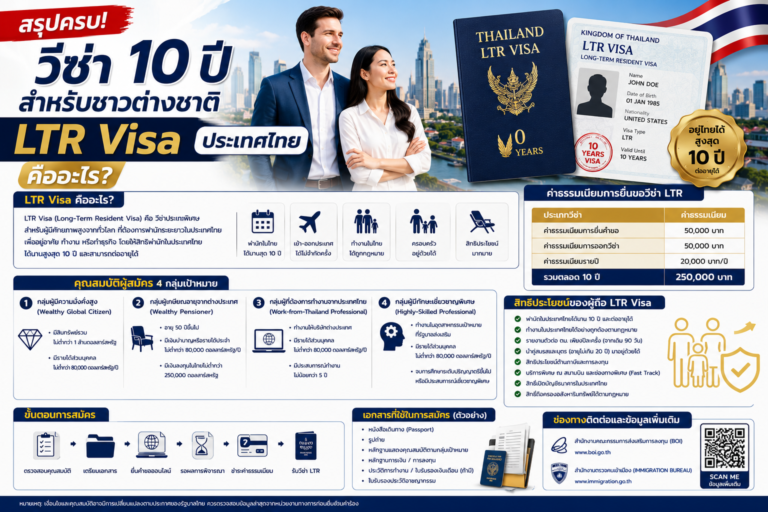
Thailand’s LTR Visa includes Wealthy Pensioners as one of the main categories. BOI guidance for Wealthy Pensioners focuses on passive or unearned income, such as pension, interest, dividends, royalties, or rental income. Employment income is generally not treated the same for this category.
LTR can be attractive for retirees with strong pension or passive income, but it is not for every retiree. From real client cases, the challenge is usually proving income clearly, preparing insurance or financial-security documents, and matching BOI category requirements.
| LTR Factor | Why It Matters | Practical Tip |
|---|---|---|
| Passive income | Core evidence for Wealthy Pensioner category | Prepare pension, dividend, rental, or investment income proof |
| Insurance or financial security | May be required under LTR conditions | Check policy wording and coverage early |
| Long-term planning | LTR can be more structured than annual renewal routes | Screen eligibility before collecting heavy documents |
Thailand Privilege Visa for Retirees
A paid lifestyle route for retirees who value convenience
Thailand Privilege is a paid membership program with long-stay visa privileges and lifestyle services. It may suit retirees who want convenience, travel in and out often, dislike annual retirement paperwork, and have the budget for the membership fee.
The official Thailand Privilege website currently lists Bronze at 650,000 THB for 5 years, Gold at 900,000 THB for 5 years, and Platinum at 1,500,000 THB for 10 years. Package details and fees can change, so check the official website before payment.
| Package | Current Official Fee | Validity | Practical Caution |
|---|---|---|---|
| Bronze | 650,000 THB | 5 years | Lowest current entry package, but check benefits carefully |
| Gold | 900,000 THB | 5 years | Good for retirees who value lifestyle benefits |
| Platinum | 1,500,000 THB | 10 years | Higher upfront cost requires long-term planning |
Retirement Visa Does Not Automatically Allow Work
Retirement stay is for retirement, not employment
A retirement visa is designed for retirees who wish to stay in Thailand without working. If you plan to consult, teach, manage a business, help a partner’s company, or perform local services, work authorization should be reviewed separately.
From common mistakes we often see, retirees sometimes assume “small work” or “helping family” does not count. In practice, work-permit risk depends on the real activity, not only whether the retiree is paid.
How to Choose the Best Thailand Visa for Retirement
Step 1: Confirm age and purpose
Start with whether you are aged 50 or older and whether your true purpose is retirement without work. If you are under 50 or still working, another route may fit better.
Step 2: Compare financial proof
Check whether your case is stronger through pension income, savings, Thai bank funds, passive income, investment evidence, or membership fee budget.
Step 3: Review health insurance early
Insurance can affect O-A, O-X, and LTR planning. Review age limits, pre-existing condition exclusions, coverage amount, renewal age, and whether the policy fits official requirements.
Step 4: Think about renewal, not only first approval
A smooth retirement plan includes annual renewal, bank timing, 90-day reporting, TM30 address records, re-entry permit planning, passport validity, and spouse status.
Step 5: Plan spouse or dependent status
If both spouses are over 50, they may qualify individually. If only one person qualifies, dependent or alternative routes should be reviewed before moving.
Thailand Retirement Visa Decision Checklist
| Question | Why It Matters | Possible Direction | Done |
|---|---|---|---|
| Are you 50 or older? | Opens retirement routes | Non-O / O-A / retirement extension | ☐ |
| Do you have strong pension or passive income? | May support LTR | LTR Wealthy Pensioner | ☐ |
| Do you prefer convenience over paperwork? | May justify membership route | Thailand Privilege | ☐ |
| Do you still plan to work? | Retirement visa may not fit | Non-B / work permit route | ☐ |
| Will your spouse join? | Dependent rules vary | Plan both visas | ☐ |
| Do you travel often? | Re-entry planning matters | Multiple re-entry or Privilege benefits | ☐ |
Approved Case vs Risky Case: What Made the Difference?
From real client cases, the best visa is the one that matches daily life
| Topic | Risky Case | Stronger Case |
|---|---|---|
| Financial proof | Bank balance is prepared too late or not maintained | Financial timing is planned months before renewal |
| Insurance | Applicant checks insurance only at the last minute | Coverage and age limits are reviewed early |
| Travel | Retiree leaves Thailand without re-entry permit | Re-entry permit is checked before each trip |
| Visa choice | Applicant chooses by headline duration only | Visa is selected by lifestyle, budget, documents, and maintenance ability |
Common Mistakes Retirees Make
1. Choosing only by upfront cost
The cheapest route may not be the easiest to maintain. A standard retirement route may cost less than Thailand Privilege, but it requires renewal and financial-document discipline.
2. Ignoring insurance until the last minute
Older applicants may face age limits, exclusions, or higher premiums. Insurance should be reviewed before choosing the visa route.
3. Treating retirement visa as permission to work
Retirement stay is not an employment route. If you still want to consult, teach, or manage business activity, review work authorization separately.
4. Forgetting re-entry permit
A retiree may hold a long extension but lose the benefit by leaving Thailand without a re-entry permit. Check before every international trip.
5. Misunderstanding bank timing
Financial proof is not only about having money. Timing, account name, bank letter, passbook update, and balance history may matter.
6. Assuming LTR is automatically better
LTR is attractive, but it is not always more realistic. If passive income or insurance documents are weak, another route may be smoother.
7. Not planning for spouse status
If one spouse qualifies and the other does not, the family plan can become complicated. Review both statuses before moving.
Summary: Best Thailand Visa for Retirees
Key points to remember:
- The best Thailand visa for retirees depends on age, income, savings, insurance, spouse status, travel pattern, and budget.
- Most retirement-specific routes start at age 50 or older.
- Non-O and retirement extension routes may suit retirees who can manage annual renewal.
- Non-O-A may suit applicants applying from abroad for retirement long stay.
- LTR Wealthy Pensioner may suit retirees with strong passive income and supporting documents.
- Thailand Privilege may suit retirees who prefer a paid lifestyle membership route.
- Retirement stay does not automatically allow work in Thailand.
- Insurance, bank timing, re-entry permits, 90-day reporting, and TM30 records should be planned early.
- Spouse and dependent status should be reviewed before moving.
- Always check the latest official requirements before submitting documents or paying fees.
Let Co Journey Visa help compare your Thailand retirement visa options
A strong retirement visa plan should make your life easier, not more stressful. The right route should match your age, financial proof, insurance comfort, travel habits, spouse situation, and long-term lifestyle in Thailand.
ทำไมควรให้ Co Journey Visa ช่วยดูแลวีซ่าของคุณ
การขอ Thailand Retirement Visa อาจมีขั้นตอนที่ซับซ้อนและต้องการความแม่นยำในการเตรียมเอกสาร หากคุณไม่ต้องการให้เกิดความผิดพลาดและต้องการความสะดวกสบายในการดำเนินการ Co Journey Visa พร้อมให้บริการช่วยเหลือคุณในทุกขั้นตอน:
Frequently Asked Questions About the Best Thailand Visa for Retirees
What is the best Thailand visa for retirees?
For many retirees aged 50 or older, a standard retirement route such as Non-O retirement extension or Non-O-A may be practical. For higher-income retirees, LTR Wealthy Pensioner may be worth reviewing. For retirees who prefer convenience and can afford the membership fee, Thailand Privilege may be suitable.
What age do you need to retire in Thailand?
Most retirement-specific visa routes start at age 50 years or older. Thailand’s Ministry of Foreign Affairs describes Non-O-A as available to applicants aged 50 and over who wish to stay in Thailand for retirement.
Is LTR better than a retirement visa?
It depends. LTR Wealthy Pensioner may be better for retirees with strong passive income or qualifying investment who want a longer structured visa. A standard retirement extension may be more realistic for retirees who meet Immigration retirement rules but not LTR thresholds.
Is Thailand Privilege good for retirees?
Thailand Privilege can be good for retirees who want a paid membership route and prefer convenience over annual financial-document preparation. Official Thailand Privilege packages currently include Bronze, Gold, and Platinum tiers with different fees and validity periods.
Can retirees work in Thailand?
Retirement stay does not automatically allow work. If a retiree wants to work, consult, teach, manage a business, or perform local services, they should review work visa and work permit requirements.
Do retirees need health insurance for Thailand?
It depends on the visa route. Some retirement visa categories, especially O-A or O-X related routes, may involve health insurance requirements. LTR also includes insurance or financial-security conditions. Check the latest official rules before applying.
Which is better: retirement visa or marriage visa?
It depends on your situation. Retirement stay is based mainly on age and financial readiness. Marriage-based stay is based on legal marriage to a Thai citizen, relationship documents, and financial proof. Some people prefer retirement because it is more independent; others prefer marriage because it matches their family situation.
Can a retiree stay in Thailand part-time?
Yes. If you stay only a few months per year, a full retirement route may or may not be necessary. Compare visa exemption, tourist visa, DTV if relevant, retirement routes, and Thailand Privilege based on your travel pattern.
หากคุณต้องการคำแนะนำเพิ่มเติมหรือต้องการให้ Co Journey Visa ดูแลการยื่นวีซ่าของคุณ ติดต่อเราได้เลย 24 ชั่วโมง
บทความที่เกี่ยวข้อง
ติดตามข้อมูลวีซ่าอัปเดตจาก Co Journey Visa
เพิ่มเว็บไซต์นี้เป็นแหล่งข้อมูลที่ต้องการใน Google เพื่อให้ค้นพบบทความจากเราได้สะดวกขึ้น