
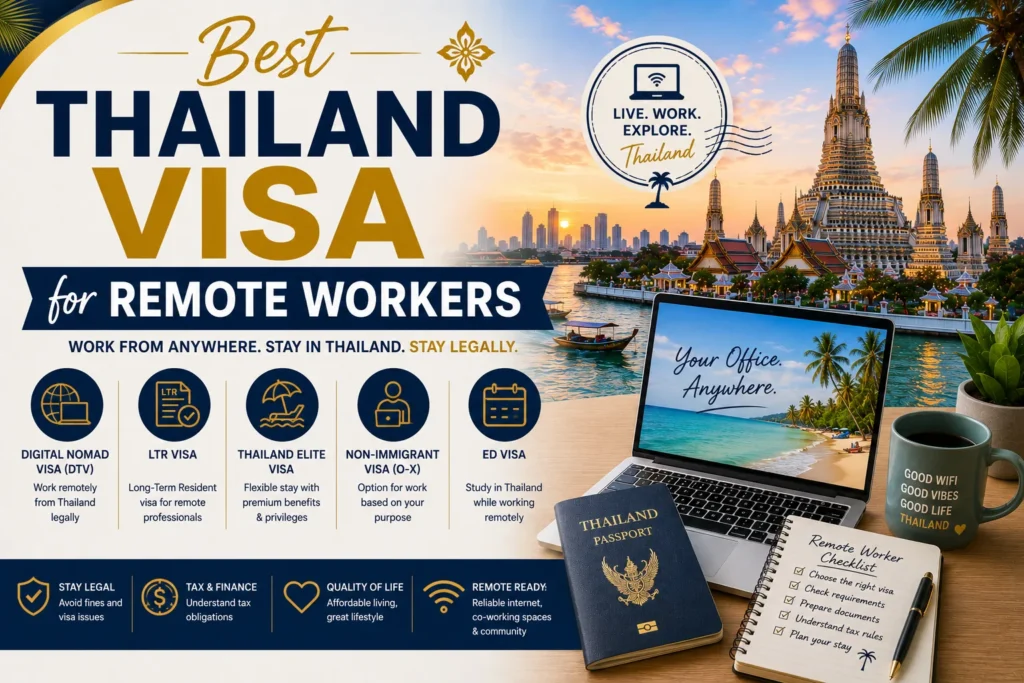
Best Thailand Visa for Remote Workers: DTV, LTR, Thailand Privilege, Tourist Visa Risks, Work Permit Rules, and Remote Work Checklist
You want to live in Thailand, keep your overseas job or clients, work from a condo or café, and avoid the old cycle of tourist entries, border runs, and uncertainty at Immigration. The question is simple, but the answer needs care: which Thailand visa is actually right for remote workers?
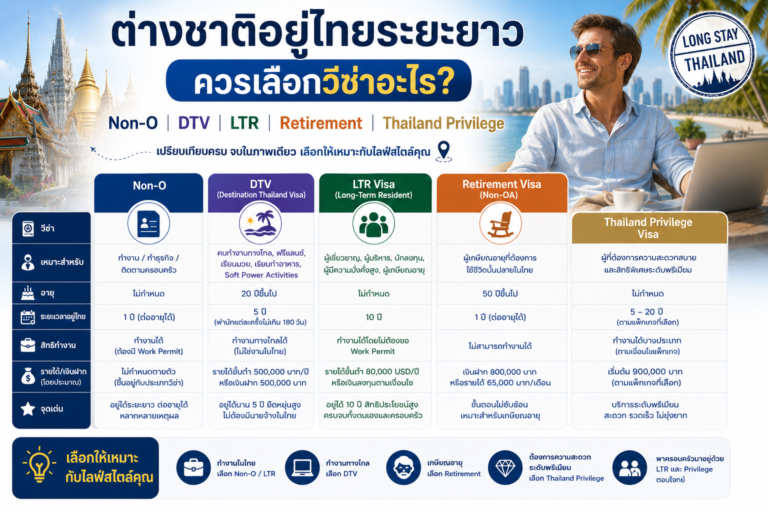
For many remote workers, the Destination Thailand Visa, or DTV, is now the most practical starting point. Official Thai Embassy guidance lists DTV for workcation purposes, including digital nomads, remote workers, foreign professionals, and freelancers, with 5-year visa validity and up to 180 days of stay per entry.
From our visa handling experience, many remote worker visa problems happen because applicants say “I work online” without documents, ignore Thai-client work risks, rely on repeated tourist entries, or apply for a visa route that does not match their real income source.
What Is the Best Thailand Visa for Remote Workers?
DTV is often the best starting point, but not for every case
The best Thailand visa for remote workers depends on how the work is structured. A remote employee working for an overseas company, a freelancer serving foreign clients, an online business owner, and a consultant working with Thai clients may need different visa planning.
You can check the latest DTV information from official Thai Embassy pages such as the Royal Thai Consulate-General Savannakhet DTV page, the Royal Thai Embassy Phnom Penh DTV page, and the official Thai e-Visa website.
| Remote Worker Type | Likely Visa Route | Practical Caution |
|---|---|---|
| Freelancer with overseas clients | DTV | Portfolio, invoices, contracts, and payment proof should be clear |
| Remote employee of overseas company | DTV or LTR Work-from-Thailand | Employer proof and income records are important |
| High-income professional at qualifying company | LTR Work-from-Thailand Professional | BOI criteria are stricter than DTV |
| Consultant serving Thai companies | Non-B / work permit review | Thai-client work may create local work issues |
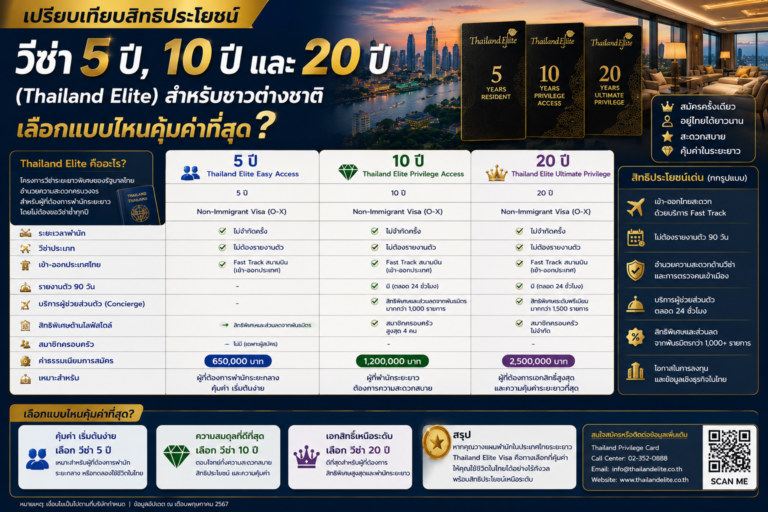
| Lifestyle remote worker with budget | Thailand Privilege plus work-risk review | Thailand Privilege is not a general work visa |
DTV Visa for Remote Workers and Digital Nomads
The most direct option for many remote-work profiles
DTV is currently one of the most visible visa options for remote workers in Thailand. Official Thai Embassy guidance describes DTV as available for workcation purposes, including digital nomads, remote workers, foreign professionals, and freelancers.
Official guidance lists DTV validity as 5 years and permitted stay of up to 180 days per entry. This makes it attractive for remote workers who want Thailand as a long-stay base but still need flexibility to travel.
| DTV Requirement | What It Proves | Practical Tip |
|---|---|---|
| Passport and photo | Identity and application eligibility | Check passport validity before applying |
| Proof of current location | Shows where you are applying from | Use documents accepted by the embassy handling your application |
| Financial evidence | Shows you can support your stay | Use clear recent statements, not cropped screenshots |
| Remote-work proof | Shows digital nomad, remote worker, foreign talent, or freelancer status | Prepare contract, employment certificate, portfolio, invoices, or payment records |
DTV Stay Length: 5-Year Validity vs 180 Days Per Entry
Do not confuse visa validity with continuous stay
DTV validity and permitted stay are different. Official guidance lists DTV as valid for 5 years, but the permitted stay is up to 180 days per entry. Some official pages also mention a one-time extension for a period not exceeding 180 days per entry, subject to Immigration rules.
From real client cases, this is one of the most common planning mistakes. A remote worker sees “5 years” and assumes they can stay continuously for 5 years without managing entry dates, extensions, travel, and Immigration compliance.
| DTV Term | Meaning | Practical Risk |
|---|---|---|
| 5-year validity | The visa may be used during its validity period according to conditions | Not the same as 5 years of continuous stay |
| 180 days per entry | Stay permission is tied to each entry stamp | You must check the actual stamp after arrival |
| Extension possibility | May be available through Immigration under current rules | Rules and local practice should be checked before relying on it |
| Multiple-entry flexibility | Useful for remote workers who travel often | Each entry still needs stamp tracking |
LTR Work-from-Thailand Professional Visa
A stronger route for qualified higher-income remote employees
Thailand’s Long-Term Resident Visa includes a Work-from-Thailand Professional category. BOI official guidance explains that this category is for foreigners applying for the purpose of working remotely from Thailand for foreign employers abroad.
LTR can be stronger than DTV for some applicants, but it is usually harder to qualify for. From our visa handling experience, LTR is often better for senior employees, executives, or high-income professionals working for established overseas companies with strong documentation.
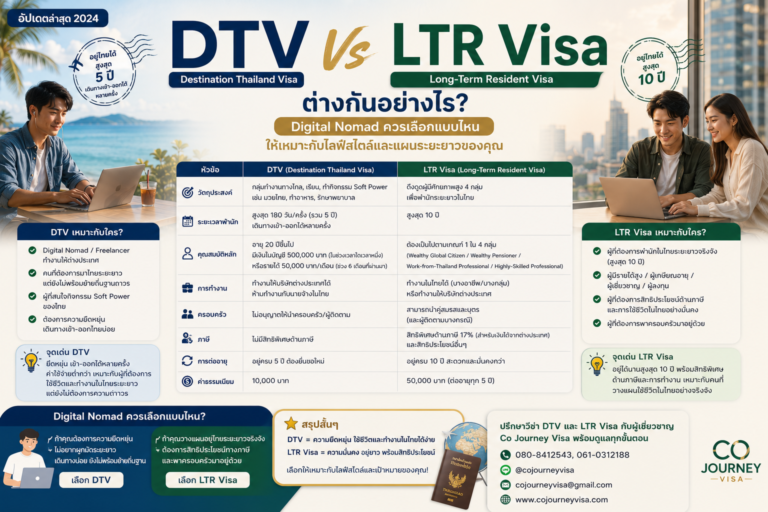
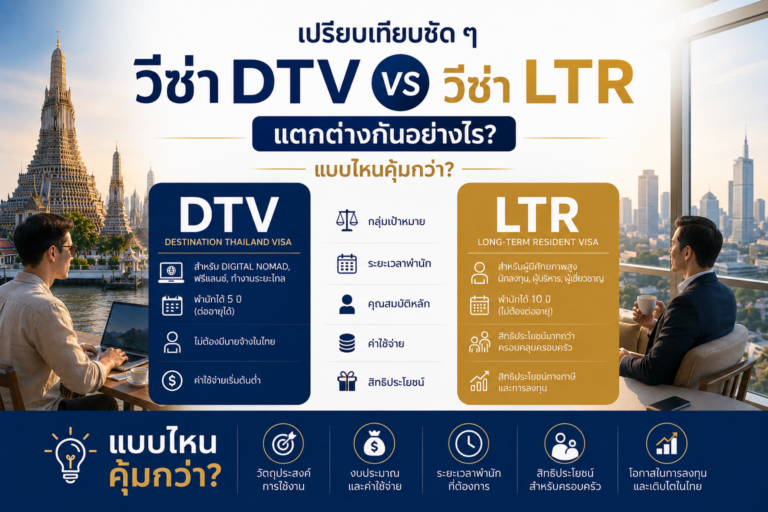
| Comparison Point | DTV | LTR Work-from-Thailand |
|---|---|---|
| Best for | Freelancers, digital nomads, remote workers, creators | Qualified remote employees of overseas companies |
| Difficulty | Often more accessible | Stricter qualification and employer profile |
| Main proof | Financial evidence and workcation proof | Income, employer, professional, and BOI criteria |
| Best strategy | Good first review for many remote workers | Worth screening if profile is strong |
DTV Is Not the Same as a Thai Work Permit
Foreign-based remote work and Thai local work are different
Remote workers should be careful with the difference between overseas work and local Thai work. Thailand’s Ministry of Foreign Affairs states that foreigners entering Thailand are not permitted to work, regardless of visa type, unless they are granted a work permit, and those intending to work in Thailand must hold the correct visa type to be eligible for a work permit.
DTV can support a workcation profile, but it should not be treated as a general permission to work for Thai employers, serve Thai clients locally, manage Thai operations, or perform local services in Thailand.
| Work Activity | Likely Risk Level | Recommended Action |
|---|---|---|
| Remote work for overseas employer | Often suitable for DTV or LTR review | Prepare employer contract and remote-work confirmation |
| Freelance work for foreign clients | Often suitable for DTV review if documented well | Prepare portfolio, invoices, contracts, and payment proof |
| Consulting for Thai clients | Higher risk | Review Non-B and work permit route |
| Working for Thai employer | Requires proper work route | Do not rely on DTV or tourist status |
Tourist Visa Is Not a Long-Term Remote Work Strategy
Tourist status may be useful for short visits, not long-term base planning
Many remote workers first enter Thailand as tourists. That may make sense for a short scouting trip, but repeated tourist entries are not a stable long-term strategy for someone living in Thailand while working every day.
From common cases we often see, remote workers who rely on tourist entries often face uncertainty: questions at entry, difficulty proving purpose, short stay periods, extension pressure, and no clear long-term compliance plan.
| Route | Best For | Main Caution |
|---|---|---|
| Tourist visa / visa exemption | Short visits or testing Thailand | Not a long-term remote-work structure |
| DTV | Remote workers and freelancers with proof | Documents must support workcation purpose |
| LTR | Qualified higher-income remote employees | Criteria are stricter |
| Thailand Privilege | Lifestyle long-stay with budget | Does not automatically solve work authorization |
How to Choose the Best Thailand Visa for Remote Work
Step 1: Identify your real work type
Ask whether you are an employee, freelancer, consultant, creator, startup founder, online business owner, or local service provider. The visa route depends on what you actually do, not only what you call yourself.
Step 2: Check where the money comes from
Foreign employer, foreign clients, global platforms, overseas company revenue, Thai clients, and Thai employers create different risk profiles. Client location is one of the most important facts in remote-worker visa planning.
Step 3: Consider DTV first for foreign-based remote work
If your work is clearly remote and foreign-based, DTV is often the best first route to review. Prepare financial evidence and work proof before applying.
Step 4: Consider LTR if your profile is strong
If you are a higher-income remote employee of an established overseas company, LTR Work-from-Thailand Professional may be worth screening. Do not apply too early if employer or income documents are weak.
Step 5: Use Non-B and work permit review for Thai-connected work
If your work involves Thai employers, Thai clients, local consulting, local teaching, local sales, or managing a Thai company, review work authorization before accepting the work.
Step 6: Plan tax separately
Visa approval does not automatically answer tax questions. Remote workers staying long-term should review tax residency, remittance, invoicing, business structure, and double-tax treaty issues with a qualified tax professional.
Remote Worker Visa Checklist
| Item | Why It Matters | Practical Tip | Done |
|---|---|---|---|
| Work source | Determines legal risk | Separate foreign clients from Thai clients | ☐ |
| Employer location | Important for DTV and LTR | Overseas employer is easier to explain | ☐ |
| Client base | Shows whether work is foreign-based | Keep contracts or invoices | ☐ |
| Financial proof | Required for DTV and other routes | Use clean bank statements | ☐ |
| Employment contract | Helps remote employees | Ask for remote-work confirmation | ☐ |
| Portfolio | Helps freelancers | Show real projects and skills | ☐ |
| Current-location proof | Often required for e-Visa | Prepare accepted local document | ☐ |
| Stay plan | Affects visa choice | DTV, LTR, or Privilege may differ | ☐ |
| Work permit risk | Crucial if Thai clients are involved | Get advice before local work | ☐ |
| Tax planning | Separate from visa | Review if staying long-term | ☐ |
Approved Case vs Risky Case: What Made the Difference?
From real client cases, the strongest applications make income source easy to understand
| Topic | Risky Case | Stronger Case |
|---|---|---|
| Work proof | Applicant only says “I work online” | Applicant provides contract, portfolio, invoices, and payment records |
| Client location | Thai-client work is hidden inside a remote-worker file | Foreign clients are clearly shown, or Thai work is reviewed separately |
| Financial proof | Sudden deposits or screenshots with no applicant name | Recent bank statements show stable funds and account owner |
| Visa strategy | Repeated tourist entries are used as a long-term plan | DTV, LTR, or another suitable route is prepared before problems appear |
Common Mistakes Remote Workers Make
1. Saying “I work online” without documents
Visa officers do not know your business unless the documents show it. Contracts, invoices, payment records, employer letters, and portfolios are much stronger than a short personal statement.
2. Choosing DTV without checking eligibility
DTV is useful, but it still needs proof. Official guidance lists workcation categories and supporting documents, not just a general desire to live in Thailand.
3. Ignoring the 180-day stay pattern
DTV is valid for 5 years, but stay is structured around entries. Plan around entry dates, extension possibilities, travel, and Immigration duties.
4. Working with Thai clients casually
A remote worker serving only overseas clients is different from a consultant selling services to Thai companies. If Thai clients are involved, review work-permit issues carefully.
5. Treating tourist status as a remote-work visa
Tourist status is for tourism. It may be fine for a short trial visit, but it is not a long-term remote-work structure.
6. Applying for LTR too early
LTR can be powerful, but the documentation is stricter. If your employer, income, or professional profile does not clearly meet the criteria, applying too early can waste time.
7. Forgetting tax planning
Visa approval does not mean the tax side is solved. Long stays, income remittance, company ownership, and client billing may need separate planning.
Summary: Best Thailand Visa for Remote Workers
Key points to remember:
- DTV is often the best Thailand visa starting point for many remote workers, digital nomads, freelancers, and foreign talent.
- Official DTV guidance lists 5-year validity and up to 180 days of stay per entry.
- DTV applicants should prepare financial evidence and proof of remote-work or freelancer status.
- LTR Work-from-Thailand Professional may suit higher-income remote employees of qualifying overseas companies.
- Thailand Privilege can support lifestyle long stay, but it is not a general work visa.
- Tourist visas are not a stable long-term remote-work strategy.
- Working with Thai clients or Thai employers may require Non-B and work permit review.
- Remote-worker files should clearly show who pays you, where they are based, what you do, and how you support yourself.
- Tax planning is separate from visa approval.
- Always check the latest official Thai Embassy, Thai e-Visa, BOI, MFA, and Immigration information before applying.
Let Co Journey Visa help identify your best remote-worker visa route
A strong Thailand remote-worker visa strategy should make your case easy to understand: who pays you, where your employer or clients are based, how your work is remote, how long you plan to stay, and whether any activity connects to Thailand.
ทำไมควรให้ Co Journey Visa ช่วยดูแลวีซ่าของคุณ
การขอ Thailand Remote Worker Visa Route อาจมีขั้นตอนที่ซับซ้อนและต้องการความแม่นยำในการเตรียมเอกสาร หากคุณไม่ต้องการให้เกิดความผิดพลาดและต้องการความสะดวกสบายในการดำเนินการ Co Journey Visa พร้อมให้บริการช่วยเหลือคุณในทุกขั้นตอน:
Frequently Asked Questions About the Best Thailand Visa for Remote Workers
What is the best Thailand visa for remote workers?
For many remote workers, DTV is the best starting point because it is officially listed for workcation, including digital nomads, remote workers, foreign professionals, and freelancers. Higher-income remote employees of qualifying overseas companies may also consider LTR Work-from-Thailand Professional.
How long can remote workers stay in Thailand on DTV?
Official Thai guidance lists DTV validity as 5 years and stay of up to 180 days per entry. Applicants should check the latest extension and re-entry rules before planning a long stay.
What documents do remote workers need for DTV?
Common documents include passport, recent photo, proof of current location, financial evidence, and proof of workcation purpose. For remote workers, this may include employment contract, employment certificate, professional portfolio, invoices, payment records, or business evidence.
Is LTR better than DTV for remote workers?
It depends on your profile. LTR may be better for higher-income remote employees working for established overseas companies. DTV may be more practical for freelancers, creators, consultants, and remote workers who do not meet LTR criteria.
Can I work remotely in Thailand on a tourist visa?
Tourist status is not designed as a long-term remote-work route. A short visit may be possible, but if Thailand becomes your base while you work online, DTV, LTR, or another suitable route should be reviewed.
Can I work for Thai clients on DTV?
Be careful. DTV supports workcation and remote-work profiles, but local work for Thai clients or Thai companies may raise work-permit issues. Get proper advice before accepting Thai-client work.
Do remote workers need a Thai work permit?
It depends on the activity. Remote work for overseas employers or clients may fit DTV or LTR routes. Work for Thai employers, Thai clients, or local Thai business operations may require a work permit.
Is Thailand Privilege good for remote workers?
Thailand Privilege can be useful for lifestyle long stay if budget is not the main issue, but it is not a general work visa. Remote workers should still review whether their work activity is foreign-based or connected to Thailand.
หากคุณต้องการคำแนะนำเพิ่มเติมหรือต้องการให้ Co Journey Visa ดูแลการยื่นวีซ่าของคุณ ติดต่อเราได้เลย 24 ชั่วโมง
บทความที่เกี่ยวข้อง


ติดตามข้อมูลวีซ่าอัปเดตจาก Co Journey Visa
เพิ่มเว็บไซต์นี้เป็นแหล่งข้อมูลที่ต้องการใน Google เพื่อให้ค้นพบบทความจากเราได้สะดวกขึ้น