
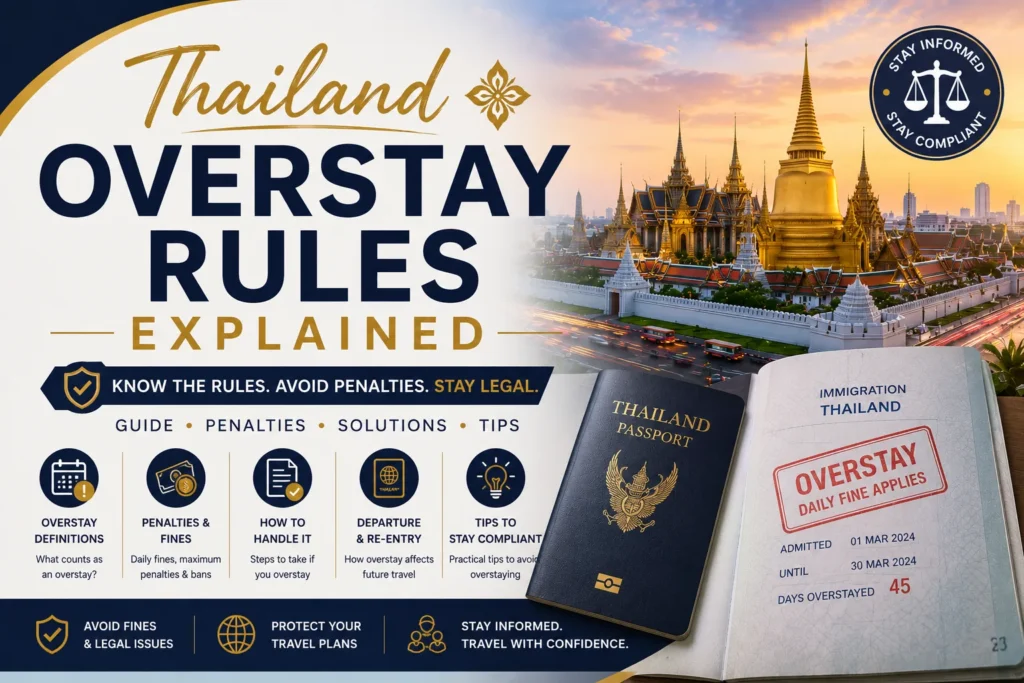
Thailand Overstay Rules Explained: Fine, 500 THB Per Day, 20,000 THB Cap, Re-entry Ban, Visa Extension Mistakes, and Immigration Checklist
You check your passport the night before flying out of Thailand and suddenly notice the “admitted until” date already passed. Maybe it was one day. Maybe it was two weeks. Maybe you thought your visa expiry date was the same as your permitted stay. This is the moment many travelers panic.
In Thailand, overstay means staying in the country after your permitted stay has expired. The common overstay fine is 500 THB per day, with a maximum fine of 20,000 THB, according to Thai Immigration guidance. Longer or more serious overstays can lead to deportation and re-entry bans, especially if the person does not surrender and is arrested.
From our visa handling experience, many Thailand overstay cases are not intentional. They happen because the traveler reads the wrong date, forgets an extension deadline, completes a 90-day report but ignores the visa expiry, or leaves Thailand without understanding re-entry permit rules.
What Is Thailand Overstay?
Overstay means staying beyond your permitted-stay date
Thailand overstay happens when a foreigner remains in Thailand after the date Immigration allowed them to stay. This date is usually shown in the passport as the “admitted until” date, permitted-stay stamp, or latest extension stamp.
The most important point is that your permitted-stay date may be different from your visa validity date. A visa can sometimes be valid for entry, but your actual stay period is controlled by the stamp given by Immigration. You can check general visa and stay guidance through the official Thai Immigration Bureau website and the official Ministry of Foreign Affairs visa information page.
| Date / Document | What It Means | Overstay Risk |
|---|---|---|
| Visa validity date | Period during which the visa can be used to enter Thailand | Not always your stay deadline |
| Entry stamp | Permission to stay granted on arrival | This is usually the deadline to track |
| Extension stamp | New stay permission granted by Immigration | The new stamp controls the next deadline |
| 90-day report receipt | Address reporting record | Does not extend your stay |
Thailand Overstay Fine and Penalties
The fine is only one part of the risk
Thai Immigration guidance commonly states that overstay under 90 days is fined at 500 THB per day, with a maximum fine of 20,000 THB. This is the figure most travelers hear about.
However, the maximum fine is not the maximum risk. Longer overstays can lead to re-entry bans, deportation, and future entry problems. This is why “I can just pay the fine later” is risky advice.
| Situation | Possible Consequence | Practical Note |
|---|---|---|
| Short overstay | 500 THB per day fine | Usually handled at Immigration or departure checkpoint |
| Fine reaches cap | Maximum 20,000 THB fine | The legal risk may continue beyond the fine amount |
| More than 90 days and surrender | Possible re-entry ban | Get advice before taking action |
| Arrested while overstaying | More serious Immigration consequences | Being arrested is riskier than voluntary surrender |
Thailand Overstay Re-entry Ban Rules
Surrendering and being arrested are treated differently
Thai Immigration warning guidance distinguishes between foreigners who surrender and foreigners who are arrested while overstaying. In general, surrendering before being caught is treated less severely than being arrested during overstay.
From real client cases, this difference matters a lot. A person who realizes they have overstayed should not ignore the issue or wait casually. The longer the overstay continues, the more serious the consequences may become.
| Overstay Situation | Possible Ban | Practical Warning |
|---|---|---|
| More than 90 days and surrender | Possible 1-year ban | Do not delay once you discover the overstay |
| More than 1 year and surrender | Possible 3-year ban | Professional advice is strongly recommended |
| More than 3 years and surrender | Possible 5-year ban | Future Thailand plans may be seriously affected |
| More than 5 years and surrender | Possible 10-year ban | This is a high-risk Immigration case |
| Arrested while overstaying less than 1 year | Possible 5-year ban | Arrest creates more serious consequences |
| Arrested while overstaying more than 1 year | Possible 10-year ban | Urgent legal and Immigration support may be needed |
Visa Validity vs Permitted Stay: The Most Common Cause of Overstay
Your passport stamp controls your real deadline
Many overstays happen because travelers misunderstand the difference between visa validity and permitted stay. Visa validity usually means the period during which the visa can be used to enter Thailand. Permitted stay means how long you can remain after Immigration admits you.
From common cases we often see, a traveler may hold a visa that looks valid for several months but receive a shorter permitted stay on arrival. If they follow the visa validity date instead of the entry stamp, they may accidentally overstay.
| Example | Wrong Assumption | Safer Reading |
|---|---|---|
| Tourist visa validity | “My visa is valid, so I can stay until that date.” | Check the entry stamp and permitted-stay date |
| Visa extension | “I applied before, so I should be safe.” | Check the latest extension stamp date |
| Re-entry permit | “Re-entry gives me more time.” | Re-entry only protects existing permission |
| 90-day report | “Reporting my address means my stay is fine.” | 90-day reporting does not extend stay |
What to Do If You Overstay in Thailand
Step 1: Check the exact number of days
Look at your passport entry stamp or latest extension stamp. Count from the day after your permitted-stay date expired. If you are unsure, contact Immigration or speak with a qualified visa professional quickly.
Step 2: Do not delay
If you have already overstayed, waiting usually makes the situation worse. The fine increases daily until the cap, and longer overstays can create more serious consequences.
Step 3: Do not try to fix overstay with the wrong process
A 90-day report is not a fix. TM30 is not a fix. A re-entry permit is not a fix. Visa extension should normally be handled before the stay expires.
Step 4: Prepare for the fine if leaving
If you are leaving Thailand and resolving the overstay at departure, prepare Thai Baht for the fine. Keep the receipt or any Immigration record after payment.
Step 5: Be careful with long overstay
If the overstay is more than 90 days, re-entry ban rules may apply. If you are stopped or arrested while overstaying, consequences can be more serious than voluntary surrender.
Step 6: Review future entry risk
After an overstay, especially longer than a few days, future entry to Thailand may receive more attention. Keep records of fine payment, departure date, passport stamps, and any Immigration documents.
Thailand Overstay Prevention Checklist
| Item | Why It Matters | Practical Tip | Done |
|---|---|---|---|
| Entry stamp | Shows your real stay deadline | Take a photo after arrival | ☐ |
| Visa validity | Shows when the visa can be used | Do not confuse it with stay length | ☐ |
| Extension deadline | Prevents accidental overstay | Set reminders 14 and 7 days before expiry | ☐ |
| Flight date | Must fit your permitted stay | Check before booking changes | ☐ |
| 90-day report date | Separate long-stay duty | Does not extend stay | ☐ |
| Re-entry permit | Protects existing stay during travel | Does not add more days | ☐ |
| TM30 address record | Supports Immigration services | Does not fix overstay | ☐ |
| Passport validity | Can affect extension options | Renew early if close to expiry | ☐ |
| Immigration receipts | Proof of extension or reporting | Keep digital copies | ☐ |
Overstay vs Visa Extension vs 90-Day Report vs Re-entry Permit
Do not confuse penalties with Immigration services
Many people try to solve overstay by doing the wrong process. A visa extension, 90-day report, TM30, and re-entry permit each have a different purpose. None should be treated as a safe way to ignore an expired stay.
| Process | Purpose | Does It Fix Overstay? | Main Warning |
|---|---|---|---|
| Visa extension | Request more time before expiry | Not as normal planning after expiry | Apply before the deadline |
| 90-day report | Report current address | No | Does not add stay time |
| TM30 | Residence notification | No | Address record only |
| Re-entry permit | Preserve current stay when leaving | No | Does not extend stay |
| Overstay fine | Penalty for staying too long | Resolves fine, not always future risk | Long overstay may trigger bans |
Approved Case vs Risky Case: What Made the Difference?
From real client cases, the difference is usually early action
| Topic | Risky Case | Stronger Case |
|---|---|---|
| Date tracking | Traveler reads visa expiry date instead of entry stamp | Traveler tracks the admitted-until date from the stamp |
| Extension timing | Applicant waits until after the stay expires | Applicant prepares extension documents before the deadline |
| Long overstay | Person ignores the issue and hopes to pay later | Person gets advice quickly and avoids making the case worse |
| Future entry | No records kept after paying overstay fine | Fine receipt, departure stamp, and Immigration records are saved |
Common Thailand Overstay Mistakes
1. Reading the visa expiry date instead of the entry stamp
This is the most common mistake. The visa expiry date may only mean the last day you can use the visa to enter. Your stay deadline is the permitted-stay stamp.
2. Assuming one day does not matter
Even one day is technically overstay. It may be handled with a fine or Immigration processing, but it is still not something to treat casually.
3. Waiting until the airport without checking
Some travelers only check the stamp at airline check-in. That creates panic and leaves no time to ask Immigration for advice.
4. Thinking 90-day reporting extends stay
A 90-day report is only an address notification. It does not add time to your visa or extension.
5. Forgetting that extensions must be done before expiry
A visa extension should be handled before your stay runs out. If you miss the deadline, the case becomes overstay.
6. Misunderstanding re-entry permit after travel
A re-entry permit protects an existing stay when leaving and returning. It does not create extra days or fix an expired permission.
7. Ignoring long overstay
Long overstay is not just a bigger fine. Immigration warning guidance shows that overstay beyond 90 days can lead to entry bans, and arrest while overstaying can lead to stricter bans.
Summary: Thailand Overstay Rules
Key points to remember:
- Thailand overstay means staying beyond your permitted-stay date.
- The passport entry stamp or latest extension stamp controls your stay deadline.
- The common overstay fine is 500 THB per day.
- The maximum fine is commonly 20,000 THB.
- The fine cap does not remove future Immigration risk.
- Long overstay can lead to re-entry bans.
- Being arrested while overstaying can create more serious consequences than surrendering.
- Visa validity and permitted stay are different.
- 90-day reporting, TM30, and re-entry permit do not extend your stay.
- Always check the latest official Immigration information before making decisions.
Let Co Journey Visa help review your Thailand overstay risk
A safe overstay assessment should start with the facts: your admitted-until date, visa type, extension history, number of overstay days, travel plan, and whether you are leaving immediately or need to remain in Thailand.
ทำไมควรให้ Co Journey Visa ช่วยดูแลวีซ่าของคุณ
การขอ Thailand Overstay Case Review อาจมีขั้นตอนที่ซับซ้อนและต้องการความแม่นยำในการเตรียมเอกสาร หากคุณไม่ต้องการให้เกิดความผิดพลาดและต้องการความสะดวกสบายในการดำเนินการ Co Journey Visa พร้อมให้บริการช่วยเหลือคุณในทุกขั้นตอน:
Frequently Asked Questions About Thailand Overstay Rules
What counts as overstay in Thailand?
Overstay means staying in Thailand after your permitted stay has expired. The permitted stay is usually shown in your passport entry stamp or latest extension stamp.
How much is the Thailand overstay fine?
The common Thailand overstay fine is 500 THB per day, with a maximum fine of 20,000 THB, according to Thai Immigration guidance. Rules and enforcement practices can change, so check official information before making decisions.
Can I pay Thailand overstay at the airport?
In many cases, a person who overstays and is leaving Thailand may surrender at the Immigration checkpoint before departure and pay the fine. For longer or complicated overstays, seek advice before departure.
Will I be blacklisted for overstay in Thailand?
It depends on the length of overstay and whether you surrender or are arrested. Immigration warning guidance states that longer overstays can lead to re-entry bans, especially after more than 90 days or if the person is arrested while overstaying.
What happens if I overstay by one day in Thailand?
One day is still technically overstay. It may be handled with a fine or Immigration processing depending on circumstances and current practice, but you should not rely on leniency as a plan.
Can I extend my visa after I already overstayed?
Visa extensions should normally be applied for before your permitted stay expires. If you already overstayed, contact Immigration or get qualified advice quickly because the situation may need to be handled differently.
Is 90-day reporting the same as avoiding overstay?
No. A 90-day report only notifies Immigration of your address. It does not extend your permission to stay and does not prevent overstay if your visa or extension expires.
Does a re-entry permit prevent overstay?
No. A re-entry permit protects an existing permission to stay when you leave and return. It does not add more days and does not prevent overstay if your stay period expires.
หากคุณต้องการคำแนะนำเพิ่มเติมหรือต้องการให้ Co Journey Visa ดูแลการยื่นวีซ่าของคุณ ติดต่อเราได้เลย 24 ชั่วโมง
บทความที่เกี่ยวข้อง


ติดตามข้อมูลวีซ่าอัปเดตจาก Co Journey Visa
เพิ่มเว็บไซต์นี้เป็นแหล่งข้อมูลที่ต้องการใน Google เพื่อให้ค้นพบบทความจากเราได้สะดวกขึ้น